

400
700
900
The Life Of Mammals

The Life of Mammals

The Life Of Mammals

BBC Natural History (2002)
DVD
7391772326201
TV Series | Documentary
UK | English | Color | 08:20

David Attenborough looks at why mammals are the most successful creatures on the planet.


Episodes View details

1 A Winning Design 49 min | Nov 20, 2002

First in a ten-part epic series in which David Attenborough explores why mammals, including humans, are the most successful and diverse animals on the planet. His journey begins in Australia where he encounters the bizarre egg-laying platypus and the country's many marsupials - mammals like the possum, kangaroo and wombat that protect their young in a pouch.

2 Insect Hunters 49 min | Nov 27, 2002

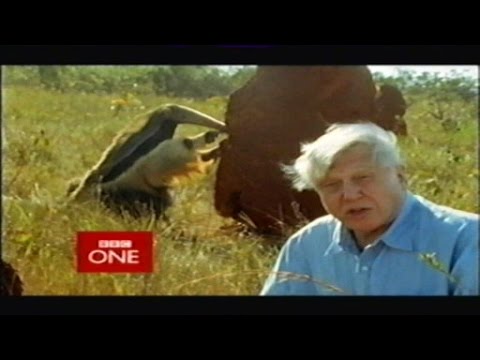
Mammals that hunt insects shared the planet with the dinosaurs, but when the giant reptiles disappeared, these creatures seized their chance to conquer new territory. David Attenborough meets strange bats, dim-witted anteaters, less familiar pangolins, moles that swim through sand and the garden hedgehog in the second part of his new series.

3 Plant Predators 49 min | Dec 04, 2002

Heavily armoured, indigestible and even poisonous, plants pose problems for some of our biggest predators. David Attenborough learns why eating plants is one of the greatest challenges for the planet's mammals.

4 Chisellers 49 min | Dec 11, 2002

Rodents are the most numerous mammals on the planet, comprising an incredibly diverse variety of species. They range from the naked mole rat, which spends its entire life below ground, to the world's largest rodent, the capybara, which grazes in herds across the vast grasslands of South America. In the fourth of his ten-part epic series David Attenborough shares his fascination with these animals, which stop only at his pet hate - rats.

5 Meat Eaters 49 min | Dec 18, 2002

From artic foxes and leopards to the Siberian tiger, carnivores feature in the fifth of David Attenborough's epic ten-part series. Travelling down from the frozen north into India, Attenborough learns of the dangers they pose to other animals - and the threat they face from man.

6 The Opportunists 49 min | Jan 08, 2003

Omnivorous mammals run the gamut from human beings to rats and, though they are generalists with their diet, each is equipped with very specialised skills. In the sixth part of his ten-part series, David Attenborough witnesses the feeding secrets of the North American raccoon, the babirusa pig in Africa and skunks in Texas, and shows how they perform astonishing feats to stay alive.

7 Return to the Water 49 min | Jan 15, 2003

David Attenborough discovers that while mammals such as manatees and sea otters left dry millions of years ago, the blue whale has always had its home in the sea. And though some marine mammals such as seals and sea lions still come ashore to breed, many conduct their mating rituals in the water.

8 Life in the Trees 49 min | Jan 22, 2003

Climbing is just the start - the challenge is to move between trees. To get close to the creatures, David Attenborough must climb into the canopy. His subjects range from the squirrels to lemurs, the latter able to leap 15 metres. More unfamiliar animals, including the Indian slender ioris and the fossa, Madagascar's largest arboreal predator, are filmed for the first time in the wild.

9 The Social Climbers 49 min | Jan 29, 2003

David Attenborough continues his documentary series. He looks at monkeys from all over the world, including red howler monkeys in Venezuela, capuchin monkeys in the Costa Rican swamps, and guenon monkeys in West Africa.

10 Food for Thought 51 min | Feb 05, 2003

The last programme of the series sees David Attenborough compare the foraging skills of humans with those of our distant relatives, the great apes. As bipedal mammals, humans have come to dominate their surroundings and, through the exploitation of the food sources available to them, evolved with larger brains.