

 English
  Nederlands
  Deutsch
  Français
  Español
  Magyar
  српски
  Dansk
Dansk  Italiano
  Svenska
  Slovenčina
  Português





BBC (2009)


TV Series | Documentary
UK | English | Color | 09:45
Life


David Attenborough's legendary BBC crew explains and shows wildlife all over planet earth in this 10-episode miniseries. The first is an overview the challenges facing life, the others are dedicated to hunting, the deep sea and various major evolutionary groups of creatures: plants, primates and other large sections of other vertebrates and invertebrates.
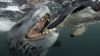
How living long enough to breed is a monumental struggle, and how many animals and plants go to great extremes to give themselves a chance.
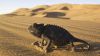
The strategies reptiles and amphibians use to overcome their shortcomings, whether for safety, breeding, or capturing prey.
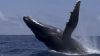
How mammals' warm blood and parental care contributed to their dominance of the planet.
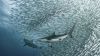
A look at the fish that dominate the planet's waters with their diverse shapes and behaviors.
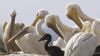
A look at birds through slow-motion cameras and aerial photography reveals some of the extraordinary things feathers allow them to do.
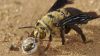
Insects and - species outnumber all higher animals by far. Their immense variety reflect adaptation to an extreme range of ecological conditions, even gravely toxic ones. Especially the nearly 60,000 fly species cover about all the globe. Many can fly, which helps getting everywhere, but they also occur on/in soil, water, host plants or animals, cavities etcetera. They often occur in great swarms, as over a billion Monarch butterflies migrating from Canada to a Mexican forest to hibernate. To occupy various positions in ecological systems, usually prey, often predator, sometimes pollinator, and so on.
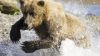
The struggle of life is often based on 'eat (and/)or be eaten'. Therefore evolutionary success is largely defined in terms of skills to survive as prey and/or hunter. Mammals are particularly successful worldwide because the add to anatomical adaptation an intelligence allowing quick and greatly diverse strategies to find preys, shelter, fight (back) etcetera.
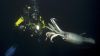
Marine invertebrates, the descendants of one billion years of evolutionary history, are the most abundant creatures in the ocean. In the Sea of Cortez, packs of Humboldt squid make night-time raids from the deep to co-operatively hunt sardines. Beneath the permanent Antarctic sea ice of McMurdo Sound, sea urchins, red sea stars and nemertean worms are filmed scavenging on a seal carcass. A fried egg jellyfish hunts amongst a swarm of Aurelia in the open ocean, spearing its prey with harpoon-like tentacles. In the shallows off South Australia, hundreds of thousands of spider crabs gather annually to moult. Large male cuttlefish use flashing stroboscopic colors and strength to win a mate, whereas smaller rivals rely on deceit: both tactics are successful. A Pacific giant octopus sacrifices her life to tend her single clutch of eggs for six months. Marine invertebrates have a lasting legacy on land too - their shells formed the chalk and limestone deposits of Eurasia and the Americas.

Flora has evolved to live in extreme conditions and a wide variety of locations and seen as the eldest 'creatures' on the planet. Their struggle for life, like animals (only usually much slower), is about food (including parasitism and 'flesh-eating'). They strive to find water, to procreate: notably pollination-mostly by animals and semination - gliding or by weather conditions, or more primitive ways such as spores. They have a varied defense (thorns, spines, toxins etc.). Specific is the need for light, the fuel of photosynthesis, leading to a hierarchy of light-related levels, because not growing high enough in time can be lethal.
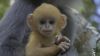
Primates include apes, monkeys and even more primitive simians, such as lemurs. Thanks to their intelligence, the higher primates take adaptation beyond anatomical evolution: their behavior transcends instinct thanks to learning and invention. Their social life especially holds the seeds of human culture, such as tribal warfare. They occur in widely different environments, which they cleverly interact with, from icy northern Japan to (mainly) the tropics in Old - and New World.

|
David Attenborough | Self - Narrator |

|
Oprah Winfrey | Self - Narrator (U.S. Broadcast) |

|
Doug Allan | Self |
|
|
Jonathan Smith | Self |
|
|
Michael Pitts | Self |
|
|
Justine Evans | Self |
|
|
Doug Anderson | Self |
|
|
Rick Rosenthal | Self |
|
|
Barrie Britton | Self |
|
|
Jerome Poncet | Self - Skipper |
|
|
Roger Munns | Self |
|
|
Matthew Swarbrick | Self |
|
|
Kevin Flay | Self |
|
|
Simon Blakeney | Self |
|
|
Tim Shepherd | Self |
|
|
Tim Fogg | Self - Climbing Team |
|
|
Adam Chapman | Self |
|
|
Nick Guy | Self |
|
|
Martha Holmes | Self |
|
|
David Baillie | Self |
|
|
Jim Spickler | Self - Climbing Team |
|
|
Heather Rose | Republican BG |
|
|
Tatyana Humle | Self |
|
|
Barry St. George | Self |
|
|
Anthony Mendillo | Self |
| Director | Martha Holmes |
|
| Mick Connaire |
|
|
| Writer | Paul Spillenger | |
| Producer | Martha Holmes, W. Clark Bunting, John Cavanagh, Mike Gunton, Catherine McCarthy, Paul Spillenger, Susan Winslow, John Ford, Simon Blakeney, Tom Clarke, Kera Rennert, Rupert Barrington, Stephen Lyle, Rosie Thomas, Patrick Morris | |
| Musician | The Band for Life, George Fenton, Richard Fiocca, Max Surla, Fred Karns | |
| Photography | Mike Holding | |
| Packaging | Custom Case |
|---|---|
| Nr Discs | 1 |
| Screen Ratios | Widescreen (1.85:1) Widescreen (16:9) |
| Audio Tracks | Dolby Digital 5.1 Dolby Digital 5.1 [English] |
| Subtitles | English | French | Spanish |
| Extras | - Life on Location - A collection of ten behind the scenes video diaries showing the exhaustive effo |
| Distributor | BBC Home Video |
| Layers | Single side, Single layer |
| Edition Release Date | Jun 01, 2010 |
| Regions | Region 1 |
| Watched | |
|---|---|
| Quantity | 0 |
| Index | 718 |
| Added Date | Mar 22, 2018 00:00:00 |
| Modified Date | Sep 06, 2024 18:29:18 |