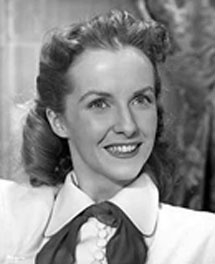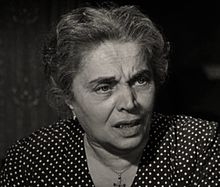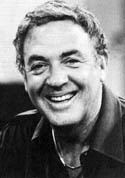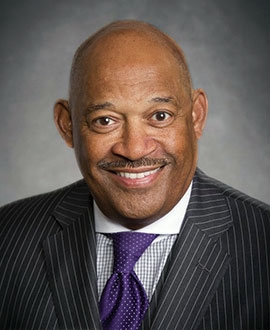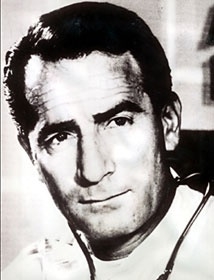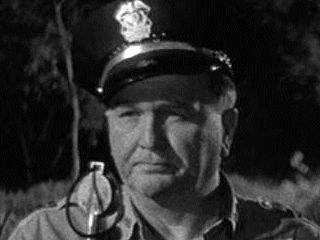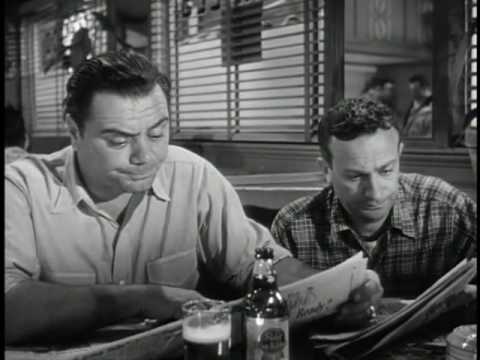


Paddy Chayefsky 's Oscar-winning slice-of-life drama is a heartwarming story about Marty Pilletti ( Ernest Borgnine ), a lonely Bronx butcher. Marty is a burly but gentle man, easing into middle age without much hope for romance or a career. He lives at home with his mother ( Esther Minciotti ), a kind but life-smothering woman, and a small circle of dead-end friends. Marty has no self-confidence and feels he's dumpy and unattractive. While it takes some doing, Marty's friends finally convince him to go to a local dance with them and try to pick up girls. At the dance he meets a plain-looking schoolteacher named Clara ( Betsy Blair ), whose life appears to mirror his own. He asks Clara to dance and soon they are dating. But to Marty's surprise and frustration, his friends put her down and his mother is hostile to her. Swayed by his friends and his mother, he doesn't call Clara back. But sitting alone at home watching television one night, Marty decides he has had enough, and defying his enclosed little world, he picks up the phone and gives Clara a call. As Marty shouts to his friends, "You don't like her. My mother don't like her. She's a dog. And I'm a fat, ugly man. Well, all I know is I had a good time last night ... You don't like her? That's too bad!" — Paul Brenner
AMG ReviewMarty derives its greatness from Paddy Chayefsky's superb screenplay, which examines the reasons why people needlessly consign themselves to lives of sterile loneliness. The film makes the audience feel the ennui that surrounds Marty (Ernest Borgnine), from his mother's smothering love to the banality of his friends and his job. In one of the screen's great moments of heroism, Marty breaks free of his self-chosen prison and accepts the emotional risk of seeking happiness. There are few closing words more frightening and more hopeful than in the climactic moment when Marty picks up the phone, dials the number of the woman he has met, and says, "Hello, Clara." An oddity among Best Picture Oscar winners in that it was based on a TV drama, Marty transcends its era and speaks to the most basic needs for love and companionship. — Richard Gilliam
|
Ernest Borgnine | Marty Piletti |
|
Betsy Blair | Clara Snyder |
|
Esther Minciotti | Teresa Piletti |
|
Augusta Ciolli | Aunt Catherine |
|
Joe Mantell | Angie |
|
Karen Steele | Virginia |
|
Jerry Paris | Tommy |
|
James Bell | Mr. Snyder |
|
Joe Bell | Undetermined Secondary Role |
|
John Beradino | Man in Bar |
|
Chad Dee Block | Dance Hall Patron |
|
Norman Borine | Dance Hall Patron |
|
Nick Brkich | Bachelor |
|
Brad Brown | Club Patron |
|
Marvin Bryan | Herbie |
|
Charles Cane | Lou |
|
Paddy Chayefsky | Leo |
|
Bud Cokes | Club Worker |
|
Diana Darrin | Herbie's girl |
|
John Dennis | Andy |
|
Steven Hecht | Six-Year-Old Boy |
|
Paul Hoffman | Man in Bar |
|
Walter Kelley | The Kid |
|
Doris Kemper | Undetermined Secondary Role |
|
Jack Klugman | Bar Patron |
| Director | Delbert Mann |
|
| Writer | Paddy Chayefsky | |
| Producer | Paddy Chayefsky, Harold Hecht, Burt Lancaster | |
| Musician | Roy Webb | |
| Photography | Joseph LaShelle | |
| Packaging | Keep Case |
|---|---|
| Nr Discs | 1 |
| Screen Ratios | Standard (1.33:1) |
| Audio Tracks | ENGLISH: Dolby Digital Mono FRENCH: Dolby Digital Mono SPANISH: Dolby Digital Mono |
| Subtitles | French | Spanish |
| Distributor | MGM Home Entertainment |
| Layers | Single side, Single layer |
| Edition Release Date | Dec 06, 2001 |
| Regions | 1 |