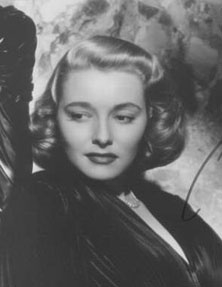
AMG: Film diarist Ross McElwee (Sherman's March) offers another personal examination of Southern history and life with Bright Leaves, a documentary tracing his own connection to North Carolina and its tobacco industry. McElwee is drawn to the subject after meeting his second cousin John, a film memorabilia collector, who shows McElwee an old Warner Bros. film from 1950, Bright Leaf, in which Gary Cooper stars (alongside Patricia Neal and Lauren Bacall) as a tobacco magnate who builds himself up from nothing only to lose everything to a rich, powerful, and ruthless Southern gentleman. The film reminds McElwee of the stories his father used to tell about his great grandfather, who built up a fortune in the tobacco business, but spent years, and tens of thousands of dollars, suing the Duke family (the most powerful tobacco growers in American history, and founders of Duke University) for stealing his famous "Durham Bull" brand. The battle ruined him and left the family bankrupt. McElwee decides to investigate the origins of the film, which leads him to explore his own connection to the tobacco industry. Even though his family is no longer in the business, McElwee feels guilty about his family's "contribution to global tobacco addiction." McElwee interviews cancer patients, including former patients of his late father, a surgeon. He also interviews several friends who smoke or who have ties to the tobacco industry. In focusing on Bright Leaf, he finds himself interviewing film historian Vlada Petric and actress Neal. All of this is intertwined with a very personal family history involving his relationship with his father, his son, and the whole issue of smoking. — Josh Ralske
REVIEW: With Bright Leaves, filmmaker Ross McElwee offers an involved personal history that also functions as a sly commentary on the tobacco industry and the impact it's had on America and the world. McElwee's diary style of filmmaking has been extremely influential, opening the door for festival hits like Nathaniel Kahn's My Architect and Mark Moskowitz's Stone Reader. McElwee's is not an overtly political film. In Bright Leaves, as in earlier works like Sherman's March, his compulsive cinematic chronicling of seemingly every facet of his life leads him to raise certain questions that have far-reaching implications, but the film remains deeply personal. The questions McElwee ponders about the tobacco industry stem from his own family's connection with it, and he approaches the issue in a laid-back, conversational manner with a lot of room for diversions, such as touching meditations on his young son's future and a visit with an eccentric film historian, Vlada Petric, who forces McElwee to sit in a wheelchair and shoot him while he pushes the wheelchair around, rambling on about the importance of kinesthetic movement in cinema. McElwee doesn't pretend to provide answers to the questions he raises. His investigation of an old Hollywood film, Bright Leaf, which resembles a piece of his own family history-- presumably the spark that set him off to make this documentary--hardly qualifies as a mystery from a narrative standpoint. But in humbly examining the devastating effects of tobacco from a personal perspective, including his own view of addiction, the crop's importance to his native North Carolina's past, and his sense of guilt over his family's past involvement in growing tobacco, McElwee provides a valuable and entertaining look at a kind of shadow history.-- Josh Ralske

 English
  Nederlands
  Deutsch
  Français
  Español
  Magyar
  српски
  Dansk
Dansk  Italiano
  Svenska
  Slovenčina
  Português