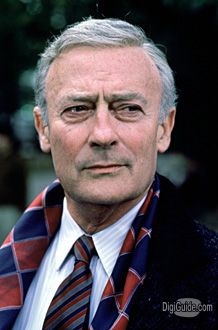
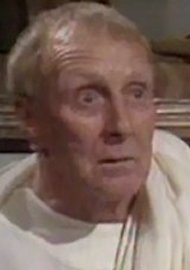
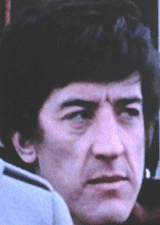
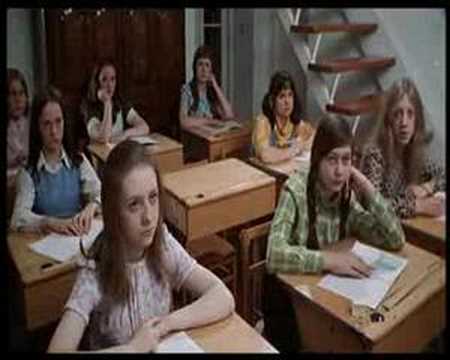
A righteous police officer investigating the disappearance of a young girl comes into conflict with the unusual residents of a secluded Scottish isle in this unsettling, intelligent chiller. Brought to the island of Summerisle by an anonymous letter, Edward Woodward's constable is surprised to discover that the island's population suspiciously denies the missing girl's very existence. Even more shocking, at least to the traditionally pious law office, the island is ruled by a libertarian society organized around pagan rituals. Repelled by the open acceptance of sexuality, nature worship, and even witchcraft, the officer takes an antagonistic attitude towards the people and their leader, an eccentric but charming English lord (Christopher Lee). The officer's unease intensifies as he continues his investigation, slowly coming to fear that the girl's disappearance may be linked in a particularly horrifying manner to an upcoming public festival. Anthony Shaffer's meticulously crafted screenplay creates a thoroughly convincing alternative society, building tension through slow discovery and indirect suggestion and making the terrifying climax all the more effective. Performances are also perfectly tuned, with Woodward suitably priggish as the investigator and horror icon Lee delivering one of his most accomplished performances as Lord Summerisle. Little noticed during its original theatrical run due to studio edits and a limited release, the film's intelligence and uncanny tone has since attracted a devoted cult following.
AMG Review:
The Wicker Man was a labor of love for director Robin Hardy, screenwriter Anthony Shaffer, and producer and co-star Christopher Lee; eager to see the project to fruition, they worked with a low budget, a short shooting schedule, and a studio on the verge of bankruptcy (that did in fact go under shortly after the film was completed). The movie was trundled into theaters in truncated form as a B-grade horror flick, cutting the 102-minute original version to 87 minutes for most theatrical screenings. This treatment must have been heartbreaking for the creative team, since The Wicker Man scarcely qualifies as a horror film (and was marketed as one purely due to Lee's involvement), and it remains one of the most unusual, thoughtful, and intelligent suspense thrillers of the 1970s. Edward Woodward, a dozen years before he rose to fame in America as the star of the TV series The Equalizer, is superb as Sgt. Howie, and Lee, who never made a secret of his desire for more intelligent and substantive roles after achieving international renown in Hammer's Dracula series, gives one of his finest performances as Lord Summerisle; with regal intelligence and sharp wit, his presence is so strong that one forgets that he's not on screen very long. Shaffer's screenplay boasts the same psychological intrigue and intelligent wit that he brought to his earlier scripts for Frenzy and Sleuth (both 1972). While repeated viewings allow one to see the clues dropped along the way, the audacious conclusion rarely fails to startle and surprise. While The Wicker Man is an absorbing entertainment even in its edited form, it's much better (and feels no longer) in its full-length cut -- which, thankfully, is available on home video, allowing renters to see the film at better advantage than the tiny number who caught it in its aborted initial release.


 English
  Nederlands
  Deutsch
  Français
  Español
  Magyar
  српски
  Dansk
Dansk  Italiano
  Svenska
  Slovenčina
  Português