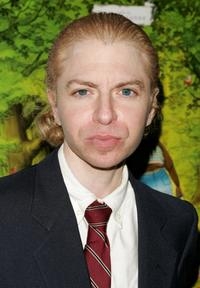
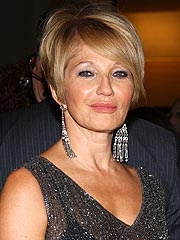
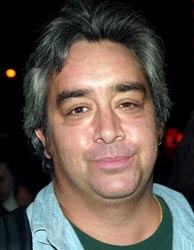
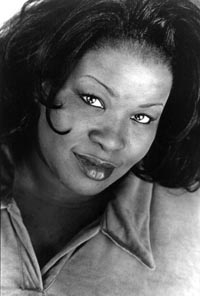
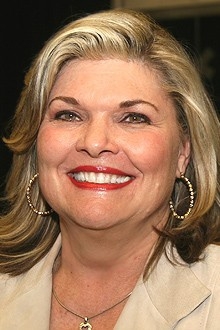
Palindromes opens with the dedication, "In loving memory of Dawn Wiener," a reference to the lead character in writer/director Todd Solondz' early feature, Welcome to the Dollhouse. Aviva has just attended Dawn's funeral. Dismayed by her older cousin's untimely death, Aviva asks her mother (Ellen Barkin) for assurance that she won't grow up to be like Dawn. Aviva only dreams of one thing — having babies. Lots and lots of babies. As a teen, while Aviva has no interest in sex, she eagerly loses her virginity to Judah (Robert Agri), the son of a family friend in hopes of getting pregnant. She does, but her mother insists that she have an abortion. Worse yet, due to a complication during the procedure, the doctor is forced to perform a hysterectomy. Unaware of her medical condition, Aviva runs away from home and is picked up by a truck driver (Stephen Adly Guirgis) who has his way with her and then abandons her at a roadside motel. She wanders in the wilderness until she meets up with Jiminy (Tyler Maynard), a friendly boy who lives with the "Sunshine Family," a group of disabled kids cared for by the cheerful Mama Sunshine (Debra Monk). The kids are also a Christian singing group. Aviva is happy until she learns that Mama Sunshine and her husband are virulently anti-abortion and that they are planning to murder a doctor. Solondz cast eight different actors in the lead role, each of whom play Aviva at different points in the story. Matthew Faber reprises the role of Mark Wiener from Welcome to the Dollhouse. Palindromes was shot at Bard College in upstate New York, using many film students as crew. It was selected by the Film Society of Lincoln Center for inclusion in the 2004 New York Film Festival. — Josh Ralske
AMG Review:
While Todd Solondz has always had his critics, the confounding Palindromes has inspired them to new levels of vitriol. In addition to Solondz' usual obsessions (social ostracism, the more unpleasant aspects of human sexuality, pedophilia), Solondz here engages abortion (complete with a dumpster full of discarded fetuses). Palindromes has the feel of a queasy fairy tale. The filmmaker's decision to cast eight different actors as his lead character, Aviva, places Palindromes in the realm of "experimental filmmaking." And it's also experimental in the sense that Solondz seems more interested in generating a reaction than in asserting any control over what that reaction will be. It seems unlikely, for example, that he intends to hold up to ridicule the happy disabled kids of the "Sunshine Family." But there will be those, even among those who would claim to "get" Solondz' work, who find their bouncy musical paeans to Jesus hilarious. An alternative view is to take it all seriously, but the film is unremittingly ugly and unpleasant, and its performances are often garishly overdetermined. Thematically, Palindromes is blunt and pointedly static, offering little to ponder. We're clearly not intended to root for Aviva to fulfill her perverse goals, and the film refuses to allow her to change her predetermined course. She, in all her permutations, may as well be a bug under the director's microscope. Solondz deserves praise for his fierce independence and his unique personal vision as an artist, but that offers little solace to those of us sitting in the dark, amid nervous laughter, wondering what the hell the point is. — Josh Ralske


 English
  Nederlands
  Deutsch
  Français
  Español
  Magyar
  српски
  Dansk
Dansk  Italiano
  Svenska
  Slovenčina
  Português