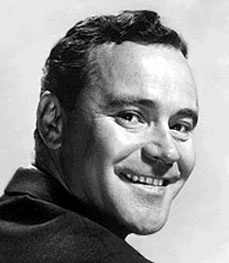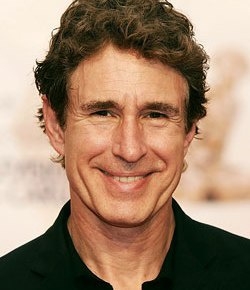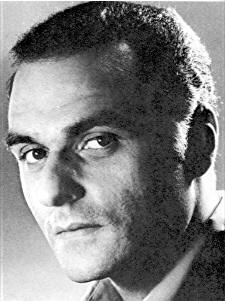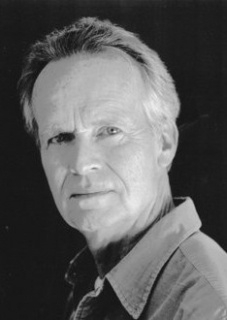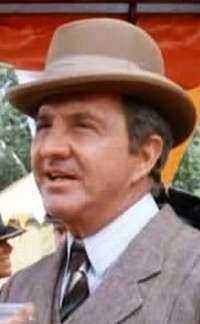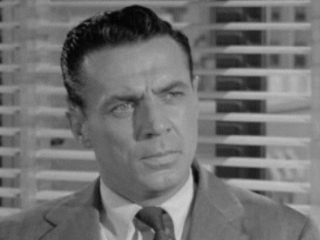


Costa-Gavras's tense political drama is set in an unspecified South American country, in the throes of a military coup. American activist Charles Horman (John Shea), who has been a thorn in the side of the country's military ever since his arrival, suddenly disappears. In trying to find out what has happened, his wife Beth (Sissy Spacek) is stonewalled, not only by the ruling junta but by the American consulate. His father, staunchly patriotic Ed Horman (Jack Lemmon), joins Beth in her search. Ed and his daughter-in-law have never seen eye to eye politically, and he refuses to entertain the notion that his son's disappearance might be part of a larger conspiracy or cover-up. But as the days grow into weeks, Ed comes to the shattering conclusion that he and his family have been betrayed by the American government, on behalf of the "friendly" South American dictator who holds his people in a grip of iron. Adapted by Costa-Gavras and Donald E. Stewart from a book by Thomas Hauser, Missing was inspired by the true story of the late Charles Horman. In spite of (or perhaps because of) condemnation from certain high-ranking officials in the Reagan administration, the film went on to win an Academy Award for Best Adapted Screenplay, as well as nominations for Best Picture, Best Actor, and Best Actress.
AMG Review: The Greek director Constantin Costa-Gavras is famous for political thrillers such as Z. His films that followed Z, most notably State of Seige, were also crafty and powerful denunciations of entrenched corruption in European powers. Missing was his first American film. Based on the true story of Charles Horman as told in the book by Thomas Hauser, Missing is both an indictment of government oppression and a tense, stirring look at the generation gap of the 1960s and 1970s. Horman was a writer who disappeared in an American-backed Chilean coup. In the film, the country is an unnamed Latin American nation, but there is no mistaking the script's scathing attack on the United States government and its accomplices. The film focuses on the struggles of Horman's hippie wife (Sissy Spacek) and strict conservative father (Jack Lemmon) to find him and gain his release. Costa-Gavras has no use for the maudlin sentiment that normally accompanies such generational conflicts in movies; Lemmon and Spacek forge their unlikely alliance under fire. Both give superb performances, with Lemmon showing the dramatic talent that had long been neglected for comic roles.
|
Jack Lemmon | Ed Horman |
|
Sissy Spacek | Beth Horman |
|
Melanie Mayron | Terry Simon |
|
John Shea | Charles Horman |
|
Charles Cioffi | Captain Ray Tower |
|
David Clennon | Consul Phil Putnam |
|
Richard Venture | U.S. Ambassador |
|
Jerry Hardin | Colonel Sean Patrick |
|
Richard Bradford | Andrew Babcock |
|
Joe Regalbuto | Frank Teruggi |
|
Keith Szarabajka | David Holloway |
|
John Doolittle | Dave McGeary |
|
Janice Rule | Kate Newman |
|
Ward Costello | Congressman |
|
Hansford Rowe | Senator |
|
Tina Romero | Maria |
|
Richard Whiting | Statesman |
|
Martin LaSalle | Paris |
|
Terence Nelson | Colonel Clay |
|
Robert Hitt | Peter Chernin |
|
Félix González | Rojas |
|
María Eugenia Ríos | Mrs. Duran |
|
Jorge Russek | Espinoza |
|
Edna Necoechea | Pia |
|
Alan Penwrith | Samuel Cross |
| Director | Costa Gavras |
|
| Writer | Costa Gavras, Donald E. Stewart, Thomas Hauser, John Nichols | |
| Producer | Peter Guber, Edward Lewis, Mildred Lewis, Terence Nelson, Jon Peters | |
| Musician | Vangelis | |
| Photography | Ricardo Aronovich | |
| Packaging | Keep Case |
|---|---|
| Nr Discs | 1 |
| Screen Ratios | Anamorphic Widescreen (1.85:1) |
| Audio Tracks | ENGLISH: Dolby Digital Mono |
| Distributor | Universal Studios |
| Layers | Single side, Single layer |
| Edition Release Date | Nov 23, 2004 |
| Regions | 1 |