

 English
  Nederlands
  Deutsch
  Français
  Español
  Magyar
  српски
  Dansk
Dansk  Italiano
  Svenska
  Slovenčina
  Português





Paramount (1986)


Drama
USA | English | Color | 01:59


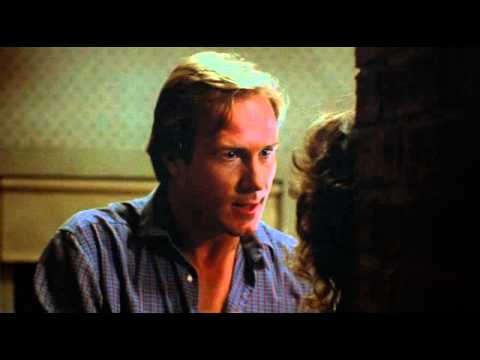
Children of a Lesser God is a love story about a speech teacher who falls for a beautiful yet distant deaf girl in a small New England school for the deaf, and the obstacles that they face due to their differences. William Hurt plays James Leeds, a renegade teacher with an unconventional approach to education and a resume that includes stints as a bartender and a disk jockey. Upon his arrival, he is warned by school administrator Dr. Franklin (Philip Bosco) not to get creative with his instruction. Naturally, Leeds already has his mind set on his teaching plan and proceeds to play loud rock music in class in order to teach the students to feel the vibrations of the music and get them to try to speak phonetically. But a new element enters his life when he meets the attractive custodian, Sarah (Marlee Matlin). An exceptionally intelligent yet extremely bitter young woman, Sarah is a graduate of the school who has decided to remain there, in the confines of her world of silence; it's safer for her to be with her own "people" than to face what she perceives as a cruel and uncaring world. She hardly seems interested in James and will only communicate with him through signing, although she can read lips and even speak a little. James learns from Sarah's mother (Piper Laurie) that Sarah was sexually molested as a teenager; this explains why she is so wary of his attempts to form a relationship with her and why she is so full of fear. Eventually, James does get through to Sarah and the two fall in love, although both have to learn new ways to communicate their feelings. Though it seldom resembles the Mark Medoff play on which it was based, this directing debut from Randa Haines won an Best Actress Oscar for Matlin, for her first screen performance.
AMG Review: Anyone who's ever been impatient with movie characters who repeat back the other end of phone conversations -- a lazy and laughable device meant to help the audience -- may grow weary of Children of a Lesser God. Here, it's William Hurt who unnecessarily vocalizes all of Marlee Matlin's sign language, even in wrenching emotional moments involving hard truths, when the meaning of certain signs might easily be inferred in context. Not resorting to subtitles is in keeping with the talky quality of what originated as a stage play (authored by screenwriter Mark Medoff), but it asks too much suspension of disbelief. Shouldn't a film interested in recreating the experience of deafness be a little more silent? The story moves along in heavy-handed strides, as Hurt's gregarious speech therapist and Matlin's stubborn janitor launch into a hasty romance plagued by the predictable communication difficulties. One suspects that the film was nominated for Best Picture more on the basis of its courageous subject matter than its execution, which is fairly ordinary. What stands out are the intense performances, notably that of Matlin, whose real-life deafness adds an extra poignancy to her Oscar-winning portrayal. Both leads show a commitment to the material that's beyond the call of duty, which elevates Children of a Lesser God above its faults.
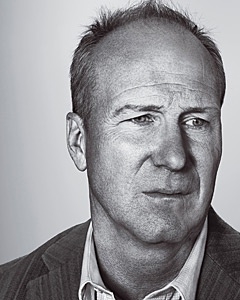
|
William Hurt | James |
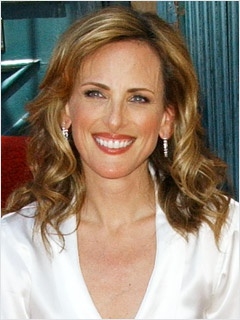
|
Marlee Matlin | Sarah |
|
Piper Laurie | Mrs. Norman |
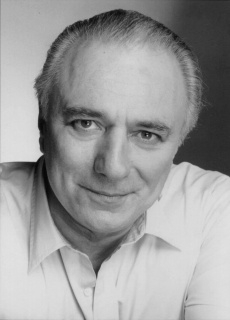
|
Philip Bosco | Dr. Curtis Franklin |

|
Allison Gompf | Lydia |
|
|
John F. Cleary | Johnny |
|
|
Philip Holmes | Glen |
|
|
Georgia Ann Cline | Cheryl |
|
|
William D. Byrd | Danny |
|
|
Frank Carter Jr. | Tony |
|
|
John Limnidis | William |
|
|
Bob Hiltermann | Orin |
|
|
E. Katherine Kerr | Mary Lee Ochs |
|
|
John Basinger | Alan Jones |
|
|
Barry Magnani | Tom Schuyler |
|
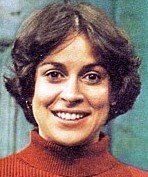
Linda Bove | Marian Loesser |
|
|
Ann Hanson | Martha Franklin |
|
|
James Carrington | Mr. Harrison |
|
|
Max Brown | Glen's Father |
|
|
María Cellario | Glen's Mother |
|
|
Jon-Paul Dougherty | Glen's Brother |
|
|
Linda Swim | Sarah's Friend |
|
|
Lois Clowater | Sarah's Friend |
|
|
Allan R. Francis | Waiter |
|
|
Richard Kendall | Cafeteria Cook |
| Director | Randa Haines |

|
| Writer | Mark Medoff, Hesper Anderson, James Carrington | |
| Producer | Alan Collis, Candace Koethe, Patrick J. Palmer, Burt Sugarman | |
| Musician | Michael Convertino | |
| Photography | John Seale | |
| Packaging | Keep Case |
|---|---|
| Nr Discs | 1 |
| Screen Ratios | Anamorphic Widescreen (1.85:1) |
| Audio Tracks | ENGLISH: Dolby Digital Mono FRENCH: Dolby Digital Mono |
| Subtitles | English |
| Distributor | Paramount Home Entertainment |
| Layers | Single side, Dual layer |
| Edition Release Date | Dec 12, 2000 |
| Regions | 1 |