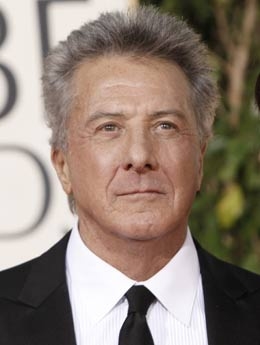
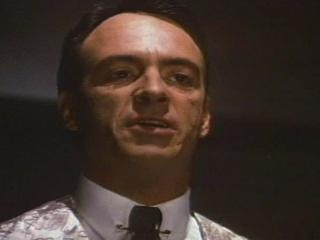
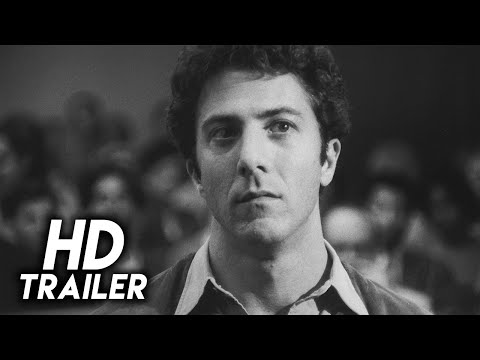
Adapted by Julian Barry from his own Broadway play, Lenny manages to be both brutally frank and highly romanticized in detailing the short life and career of influential, controversial stand-up comedian Lenny Bruce. The chronology hops, skips and jumps between Lenny (Dustin Hoffman) in his prime and the burned-out, strung-out performer who, in the twilight of his life, used his nightclub act to pour out his personal frustrations at great, boring length. We watch as up-and-coming comic Bruce courts his "Shiksa goddess," a stripper named Honey (Valerie Perrine). With family responsibilities, Lenny is encouraged to do a "safe," conformist act, but he can't do it. Constantly in trouble for flouting obscenity laws, Lenny develops a near-messianic complex, which fuels both his comedy genius and his talent for self-destruction. Worn out by a lifetime of tilting at Establishment windmills, Lenny Bruce died of a drug overdose in 1966. Director Bob Fosse chose to film Lenny in black-and-white, giving the film the texture of a documentary. Though a film as verbally graphic as Lenny could not have been made when the real Lenny Bruce was alive, audiences in 1974 responded, to the tune of an $11 million gross.
AMG Review: His first non-musical film, Bob Fosse's biopic Lenny (1974) confirmed the breadth of the former hoofer's -- and his star Dustin Hoffman's -- protean talents. Detailing socially conscious pottymouth comic Lenny Bruce's trailblazing rise and self-immolating fall in a series of flashbacks, Fosse and screenwriter Julian Barry inject grim drama into an unsentimental portrait of the artist as a highly flawed man. Along with re-staging pieces of the straight-talking routines that made Bruce famous, Fosse and Hoffman relentlessly reveal his demise as a performer in an unwavering long take of Bruce's drug-addled on-stage meltdown after his obscenity trials. Bruce Surtees' rich black-and-white photography lends a note of documentary authenticity as well as an appropriately somber nocturnal atmosphere. Oscar nominee and critics' prize-winner Valerie Perrine hit her career peak as Bruce's stripper-turned-junkie wife, Honey. Hoffman's embodiment of the comic illuminates Bruce's own destructive role in his free speech martyrdom. Praised by the critics and well appreciated by a culturally savvy 1974 audience that didn't mind cinematic downers, Lenny went on to receive six Oscar nominations, including Best Picture, Fosse's second nod for Best Director, and Best Actor.

 English
  Nederlands
  Deutsch
  Français
  Español
  Magyar
  српски
  Dansk
Dansk  Italiano
  Svenska
  Slovenčina
  Português