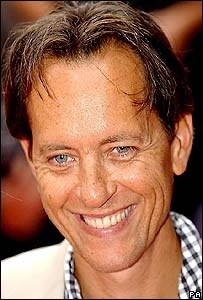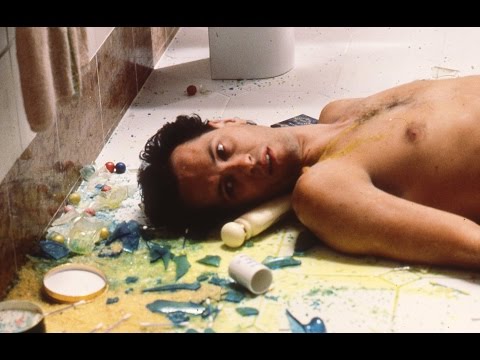


After years of capitalizing on the weaknesses of a gullible public, a London advertising executive finds that his worst qualities have literally taken on a life of their own in this scathing satire. Successful copywriter Dennis Bagley (Richard E. Grant) lives a posh life with his lovely wife, Julia (Rachel Ward), in the London suburbs. Pushed to distraction by a bothersome new pimple-ointment account, he flirts with renouncing his career and becoming socially aware. Immediately thereafter, Bagley discovers that he's developed a zit of his own — a monstrous boil on his neck that begins whispering evil things in his ear. Convinced that he's being taken over by his dark half, Bagley soon finds his "good" self relegated to the boil while his malevolent alter ego returns to the world of advertising with a vengeance. At first, Julia is relieved that her husband seems to have bounced back from the abyss of mental illness, but soon she realizes that she prefers the gentle but crazy Dennis to the poisonous professional. Written and directed by Withnail & I's Bruce Robinson, How to Get Ahead in Advertising reunites the director with that film's leading man Richard E. Grant. — Brian J. Dillard
This black-hearted satire from actor-turned-director Bruce Robinson offers an incisive look at the cynicism and ugliness of unfettered capitalism. But it ain't Kafka, which is why it loses something once it gets past its witty setup and into its metamorphic main story line. Richard Grant is never less than riveting as the two sides of his personality — the human being and the ad man — split in two and one takes up residence in the talking boil on his neck. He's at his best, however, not when he's gibbering to himself, but when he's coldly explaining the mechanisms by which advertisers and their employers control the world. "'We know it's naughty, but you do deserve it,'" his character spits at a group of hapless junior account execs. "'Go on, darling, swallow a bun!" And she does. And the instant she does, the guilt cuts in. So here we are again with our diet." Such diatribes may ultimately grow wearisome, especially when espoused endlessly by a sentient pimple, but they turn the film's first act into a razor sharp satire about all that's ugly in modern consumer culture. As the film progresses, however, writer/director Robinson treats his talking-boil conceit literally rather than figuratively, and the laughs quickly become shrill. Rachel Ward is likable as the attractive wife who'd rather enjoy her privileged life than face up to the fiendish career that enables it, while Jacqueline Tong provides an amusing target for the Grant character's vitriol. — Brian J. Dillard
|
Richard E. Grant | Bagley |
|
Rachel Ward | Julia |
|
Richard Wilson | Bristol |
|
Jacqueline Tong | Penny Wheelstock |
|
John Shrapnel | Psychiatrist |
|
Susan Wooldridge | Monica |
|
Hugh Armstrong | Harry Wax |
|
Mick Ford | Richard |
|
Jacqueline Pearce | Maud |
|
Christopher Simon | Waiter |
|
Gino Melvazzi | Waiter |
|
Victor Lucas | Tweedy Man |
|
Dawn Keeler | Tweedy Woman |
|
Kerryann White | Girl in Elevator |
|
Vivienne McKone | Sullivan Bristol Receptionist |
|
Donald Hoath | Businessman |
|
John Levitt | Businessman |
|
Gordon Gostelow | Priest |
|
Pip Torrens | Jonathan |
|
Tony Slattery | Basil |
|
Rachel Fielding | Jennifer |
|
Pauline Melville | Mrs Wallace |
|
Roddy Maude-Roxby | Dr Gatty |
|
Francesca Longrigg | Nurse |
|
Tanveer Ghani | Hospital Doctor |
| Director | Bruce Robinson |
|
| Writer | Bruce Robinson | |
| Producer | Ray Cooper, George Harrison, Denis O'Brien, David Wimbury | |
| Musician | David Dundas, Rick Wentworth | |
| Photography | Peter Hannan | |
| Packaging | Keep Case |
|---|---|
| Nr Discs | 1 |
| Screen Ratios | Anamorphic Widescreen (1.85:1) |
| Audio Tracks | ENGLISH: Dolby Digital Surround |
| Subtitles | English | French | Spanish |
| Distributor | MGM/UA |
| Layers | Single side, Single layer |
| Edition Release Date | Dec 02, 2003 |
| Regions | 1 |