A story set in the former Yugoslavia and centered on a guy who returns to Herzegovina from Germany with plenty of cash and hopes for a good new life.
-----------------------------
Cirkus Columbia -- Film Review By Deborah Young, August 05, 2010 07:07 ET, Hollywood Reporter
Bottom Line: Danis Tanovic happily returns home in a warmhearted local story.
SARAJEVO -- Bosnia's most international director, Danis Tanovic, never has repeated the success of the paradoxical war story "No Man's Land," winner of the foreign-language Oscar in 2002, instead striking out in new international directions with "Hell" and "Triage."
With his fourth film, "Cirkus Columbia," Tanovic wisely returns to his Bosnia and Herzegovina roots, where the small but highly nuanced story, set in prewar 1991, rings with authenticity and weight.
Still, Match Factory will have to use its muscle to move this unpretentious film through jaded European markets. It has a straightforward quality that makes it seem a bit old-fashioned, or at least a story that has been told before. Fortunately, the characters are absorbing, and the story moves swiftly.
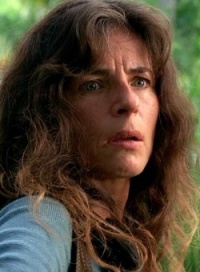
As genre, it harks back to the Eastern European sweet little village films, playing on that nostalgic ideal of summer swims in the river and first sexual encounters while leading up to the ugly war about to break out in former Yugoslavia. These two sides of the film are embodied in young Martin (Boris Ler), a ham-radio enthusiast, and his single mom, Lucija (Mira Furlan), whose tragic face reflects the atmosphere of foreboding and the chaos to come.
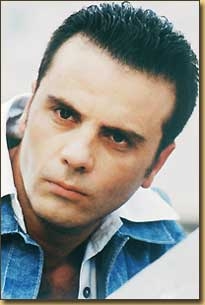
The action begins when the middle-aged Divko (Miki Manojlovic) proudly drives into town in his big Mercedes, with the flame-haired pinup Azra (Jelena Stupljanin) on his arm. Having enriched himself in Germany, he has waited for the communists to depart and is now ready to spend the rest of his days living in peace in his family home. The only problem is that it is occupied by his wife, Lucija, and his son, Martin, but he heartlessly kicks them out with the connivance of the local mayor and moves in.
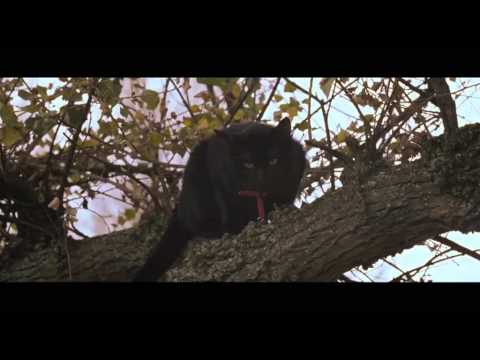
Manojlovic is a masterful comedian and a king of understatement; here, he spends most of the film mistreating poor Azra and looking for his missing cat Bonn -- or rather, he enlists Martin and Azra, and eventually the entire town, to search for his runaway pet. In the background, the war machine rumbles and prepares to strike, and we know all too well that even this lovely town in Herzegovina is going to be dragged to hell.
The script by Tanovic and Ivica Dikic is simple to a fault, becoming utterly predictable in the forbidden romance between Martin and his father's bride-to-be. One suspects there's a lot of humor lost in the translation. Although the irony of "No Man's Land" easily crossed borders, not all of "Cirkus Columbia" succeeds in doing the same.
The cast is strong, including newcomers Ler and Stupljanin, but none brightens the screen like Furlan in her Mother Courage role as Divko's abandoned ex-wife. Her neat little headscarf identifies her as a woman of the people, and she's scrappy, stubborn and beautiful, too. It's no surprise to find she has a VIP suitor knocking at her door, a local army officer who has helped raise Martin these 20 years that his father has been away.
Shot principally in Herzegovina -- location of the miracle site of Medjugorje -- the unnamed town appears to be partly Catholic, partly Muslim, though the possible religious difference between Martin and Azra never is developed. The political subtleties around the last days of Yugoslavia will be most appreciated by local audiences. Suffice it to say that Tanovic highlights the animosities of the early post-communist era.
The picture is an elaborate co-production among Bosnia and Herzegovina, France, the U.K., Slovenia, Germany, Belgium and Serbia, involving many of the region's top producers.
-----------------------
Variety:
Danis Tanovic revisits the milieu of his first (and best) film, "No Man's Land," in "Cirkus Columbia," which uses the absurdist tale of a man returning to his native Herzegovinian village to illustrate the 1992 beginnings of the bloody internecine strife in Bosnia. Though burdened by major problems of tone, Tanovic's fourth feature succeeds in making clear the incredulity with which most people regarded the thought of war and dissolution of Yugoslavia, as well as the machinations of various opportunistic groups. Commercial prospects seem slim outside the region, but fests are lining up.
Now that the communists are out of power in his backwater town and an Ustase-connected party is in, Divko (Miki Manojlovic, in a familiar blustering macho role he could play in his sleep) returns home with revenge on his mind. His primary target is wife Lucija (a drab-looking Mira Furlan, "Lost"), who failed to follow him to Germany when he was forced to flee some 20 years before.
Arriving in a ruby red Mercedes, accompanied by gorgeous girlfriend, Azra (Jelena Stupljanin), Divko evicts Lucija and their immature 20-year-old son, Martin (Boris Ler), from the family home. After flaunting his wealth and generally behaving like a schmuck, Divko ultimately gets a chance to prove he's not such a bad guy after all; subplots include Martin's falling out with best friend Pivac (Mario Knezovic), who joins a pro-Croatian paramilitary group, and Martin's not very credible fling with Azra.
As the superficial characters fret over their petty concerns, the troubles of the rest of Yugoslavia seem far from their little village, although the script (penned by Tanovic and Ivica Dikic, based on Dikic's novella) carefully keeps them simmering in the background. In one particularly ironic reminder of the era's lost innocence, TV news footage shows the Serbs shelling Dubrovnik, as a disbelieving Divko remarks, "What will they do next? Blow up the old bridge in Mostar?"
Unfortunately, the narrative allows the old-fashioned and often silly story of Divko, Azra, Martin and Lucija to outweigh the deeper theme of the approaching war. When armed conflict finally arrives in the village, it lacks the dramatic impact it should have.
While much of the humor in "No Man's Land" derived from its use of stereotypes, this tactic doesn't serve "Cirkus Columbia" as well. There are a few laughs to be had from the hick-town jokes (it's a place where a vegetarian is offered chicken because poultry isn't considered meat), but the sexist archetypes of the female characters (the always cooking-and-cleaning mother vs. the seductive sexpot) get old fast. With the distaff roles so limited, the men have more opportunities in the thesping department, although looker Stupljanin leaves a strong visual impression, mainly due to her skimpy wardrobe.
Shooting in a soft, color-faded palette in which Divko's car, girlfriend and black cat stand out brazenly, lenser Walther van de Ende creates a sense of nostalgia for a vanished world.
Before showing the film to an international audience, the producers might want to add some pre-credits information explaining the setting and historical context.


 English
  Nederlands
  Deutsch
  Français
  Español
  Magyar
  српски
  Dansk
Dansk  Italiano
  Svenska
  Slovenčina
  Português