The story of a housewife who must work the streets to earn an extra living - and who becomes the starting point for a larger socio-political essay.
Overview
Jean-Luc Godard was fascinated with prostitution as a metaphor for the corruption of modern life, and he turned his eye from the figurative to the literal selling of one's self in his 1966 film Deux ou Trois Choses Que Je Sais d'Elle (aka 2 or 3 Things I Know About Her), the story of a Paris housewife who turns tricks on the side to help pay the bills. The film proved to be one of Godard's most popular and talked-about films, and the Criterion Collection have given it its North American DVD debut in an excellent edition. 2 or 3 Things I Know About Her has been transferred to disc in its original widescreen aspect ratio of 2.35:1, letterboxed on conventional televisions and enhanced for anamorphic playback on 16:9 monitors. The bold colors, tight focus and imaginative framings of Raoul Coutard's cinematography are rendered with flawless accuracy on this DVD, which looks good enough to give nearly any home theater a chance to show its capabilities. The audio has been mastered in Dolby Digital Mono, and the sound is clear, sharp and well detailed. The dialogue is in French, with optional subtitles but no multiple language options. Criterion's release includes a full compliment of bonus materials, including an optional commentary track by Adrian Martin in which he discusses the various political and personal metaphors at work. Also featured are a pair of television interviews shot during the making of the film, one with actress Marina Vlady and another in which Godard discusses prostitution and drug abuse with a French government official. Antoine Bourseiller, a French theatrical director and producer, was a friend and colleague of Godard in the Sixties, and in an on-camera interview he talks about their working relationship and Godard's decision to walk away from their friendship. A short "visual essay" examines the many literary references that pop up in the film, and the picture's original trailer is also included. Finally, Amy Taubin contributes an original essay to the booklet included with the package, and a letter written in response to a French magazine piece on housewives working as belle de jours by one such woman is reprinted (Godard cited it as a key inspiration for the film). 2 or 3 Things I know About Her came from a period when Godard was moving away from conventional narrative and generic frameworks, but its accessible in a way his work from Weekend onward would not be, and it's intelligent and provocative stuff that still hits its targets more than 40 years after it was first released, and Criterion's DVD release allows it to look and sound very contemporary indeed.
Editorial Reviews
All Movie Guide - Wheeler Winston Dixon
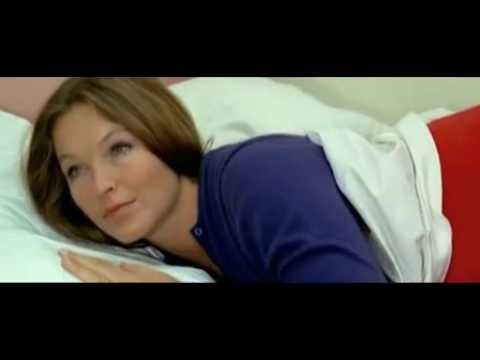
In 1966, Jean-Luc Godard was at his peak as a filmmaker, and to accommodate the producers who were seeking to back his then-commercially successful work, he undertook a strange task; he decided to make two films at the same time, partly to prove he could do it, and partly to keep up with audience demand for his films. One of the films was Two or Three Things I Know About Her, a delectable meditation on Marxism, consumer culture, the Vietnam War, sexual politics, and gender roles, all photographed in sumptuous color, and ending with famous shot of a variety of household consumer products neatly arranged on the lawn of a suburban home. As with most of the best of Godard, the film is an essay rather than a narrative; there is a semblance of a plot, involving Marina Vlady's descent into prostitution to pay the household bills behind her husband's back, but this is merely a pretext for an extended examination of contemporary Parisian life, which Godard finds arid, soul-crushing, and stupefyingly empty. The most famous scene is undoubtedly the "cosmos in a coffee cup" sequence, in which Godard's camera stares intently at a cup of coffee as cream swirls around in it, cutting closer and closer to the steaming broth, as philosophical dialogue fills the soundtrack. Godard demands much of his audience, but he gives much in return; it is some measure of how "dumbed down" we have become as a culture, even in contemporary European cinema, that films like Two or Three Things I Know About Her, once highly commercial propositions, now seem absolutely incomprehensible to most viewers. It's sad, too, because the film is absolutely gorgeous, and Godard has kept up the fight with his more recent films, such as the superb Notre Musique (2004), which deals with the events in Sarajevo in much the same fashion. But this being the 21st century, in which people have been brought up solely on popcorn entertainment, Notre Musique never made it out of a few major U.S. cities as a theatrical feature; happily, it is available on DVD. Two or Three Things I Know About Her has not, as of this writing, been distributed on DVD in the U.S., but only on VHS, although this may change in the future. And the other feature that Godard was shooting at the same time he was making Two or Three Things I Know About Her? That would be the long-suppressed Made in USA (1996), a brilliant and cerebral crime thriller nominally based on a novel by Donald E. Westlake, which Godard neglected to secure the rights to before filming. That film has just been released on European DVD only, the rights issues having apparently been resolved, at least for the moment. Both films are remarkable, individual, sensual, and utterly personal cinematic visions. The world of cinema seems divided into two camps: those who admire Godard intensely and those who feel that his philosophical tracts are both inaccessible and boring. The second group, who don't understand or appreciate his work, are precisely the ones who need to see it the most. Godard's films are a tonic for the senses in an age of hyper-commerciality -- an era he predicted in this prescient film and other works from this period in his long and still evolving career.


 English
  Nederlands
  Deutsch
  Français
  Español
  Magyar
  српски
  Dansk
Dansk  Italiano
  Svenska
  Slovenčina
  Português