

 English
  Nederlands
  Deutsch
  Français
  Español
  Magyar
  српски
  Dansk
Dansk  Italiano
  Svenska
  Slovenčina
  Português





1999


Drama
France | French | Color | 01:35


Rosetta follows a troubled young woman as she goes through her difficult life. That is, it follows her literally: the entire film is shot with handheld cameras, usually right behind the heroine. Rosetta (Emilie Dequenne) lives in a Belgian trailer park with her alcoholic mother, making a little money selling clothes that she's mended. When she finally gets a job and begins a friendship with a coworker, she believes she's reaching some degree of the normal life she desperately craves. But when she loses her job, she takes turns that may ruin any chance for happiness. Describing the plot of Rosetta doesn't capture the texture of the movie, which contains very few conventional cues to tell the viewer what's going on at any moment. Instead, events often only make sense after they're over, when you've finally gathered enough information to sort things out. It's disorienting, and will frustrate some viewers, but gradually a rich sense of reality develops. Simple actions become dense with emotion, as the intense pressure of being a young girl, forced to take on the responsibilities of an adult, becomes more and more acute. Most of Rosetta is shot in close-ups, with very few scenes that give you a sense of the locations. The cameras--like Rosetta herself--rarely get a glimpse of the big picture. A difficult film to watch, but a rewarding one. --Bret Fetzer
All Movie Guide - Michael Costello
The Dardennes brothers' unflinching portrait of an impoverished young Belgian girl ranks with the neo-realist masterpieces of De Sica and Rossellini. Rosetta (Émilie Dequenne) is a grim-visaged 18-year-old girl who desperately seeks a job which will allow her to escape the wretched trailer she shares with her alcoholic, layabout mother (Anne Yernaux). A film of nearly unbearable physical intensity, it plunges the viewer into the life of the immiserated girl so completely that one forgets that any other world could exist. Shooting with a handheld camera, the directors provide no aesthetic distancing, no opportunity for reflection, and no emotional respite from the suffering of the girl, whose soul is so knotted with anger and loneliness that she's nearly as unreachable as the feral boy in Truffaut's L'Enfant Sauvage (1970). Her suspicious, awkward reaction to the sympathetic overtures of a boy (Fabrizio Rongione) who runs a waffle stand painfully reveal how much damage she's already sustained. Indeed, it's the film's most disturbing insight that even after Rosetta has secured a measure of the normalcy she has so hungrily sought, her inability to enjoy her new state suggests that the scars inflicted on her by a cruelly indifferent society are irrevocable. Dequenne is astonishing as this creature, who she has fashioned less a young girl than a vulnerable, wounded animal. Although the film has been compared to Bresson's Mouchette (1967) and the films of De Sica, it lacks the former's sense of Christian redemption and the latter's sentimentality. But the spirit of fierce integrity which permeates the film is that of unique and visionary artists. The winner of the Palme D'Or at Cannes in 1999, the film provoked a change in Belgian labor law, which now prohibits employers from paying teenage workers less than the minimum wage.
|
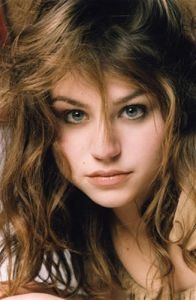
Émilie Dequenne | Rosetta |
|
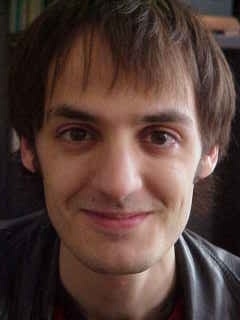
Fabrizio Rongione | Riquet |

|
Anne Yernaux | The Mother |
|
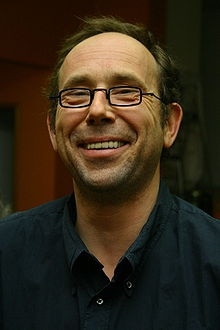
Olivier Gourmet | The Boss |
|
|
Bernard Marbaix | The Campgrounds Manager |
|
|
Frederic Bodson | The Head of Personnel |
|
|
Florian Delain | The Boss's Son |
|
|
Christiane Dorval | First Saleswoman |
|
|
Mireille Bailly | Second Saleswoman |
|
|
Thomas Gollas | The Mother's Boyfriend |
|
|
Leon Michaux | First Policeman |
|
|
Victor Marit | Second Policeman |
|
|
Colette Regibeau | Madame Riga |
|
|
Claire Tefnin | Girl in Locker Room |
|
|
Sophia Leboutte | Fired Woman |
|
|
Gaetano Ventura | Store Manager |
|
|
Christian Neys | First Paramedic |
|
|
Valentin Traversi | Second Paramedic |
|
|
Jean-Francois Noville | Hospital Worker |
| Director | Jean-Pierre Dardenne |
|
| Luc Dardenne |

|
|
| Writer | Jean-Pierre Dardenne, Luc Dardenne | |
| Producer | Jean-Pierre Dardenne, Luc Dardenne, Laurent Petin, Michele Petin, Arlette Zylberberg | |
| Musician | Jean-Pierre Cocco | |
| Photography | Alain Marcoen | |
| Edition | Criterion |
|---|---|
| Nr Discs | 1 |
| Screen Ratios | Anamorphic Widescreen (1.66:1) |
| Audio Tracks | SUB [English] |
| Subtitles | English |
| Edition Release Date | Aug 14, 2012 |
| Regions | A |