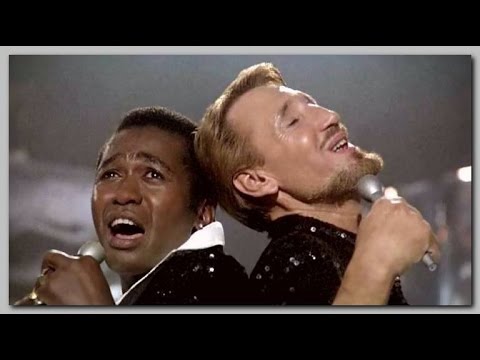
Director/choreographer Bob Fosse tells his own life story as he details the sordid life of Joe Gideon (Roy Scheider), a womanizing, drug-using dancer.
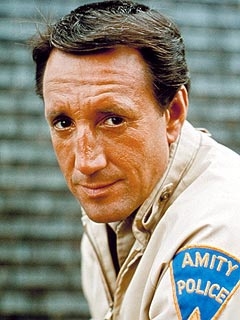
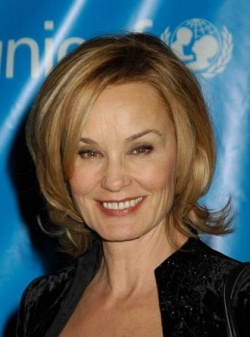
AMG: "It's showtime!" In this part film à clef, part musical phantasmagoria, director/choreographer Bob Fosse takes a Felliniesque look at the life of a driven entertainer. Joe Gideon (Roy Scheider, channeling Fosse) is the ultimate work (and pleasure)-aholic, as he knocks back a daily dose of amphetamines to juggle a new Broadway production while editing his new movie, not to mention ex-wife Audrey (Leland Palmer), steady girlfriend Kate (Ann Reinking), a young daughter, and various conquests. Joe cannot, however, avoid intimations of mortality from white-clad vision Angelique (Jessica Lange) that lead him to look back at his life as he heads for a near-inevitable coronary and his departure from this mortal coil with the appropriate razzle-dazzle. Taking his cue from Federico Fellini's 8 1/2 (1963), Fosse moves from realistic dance numbers to extravagant flights of cinematic fancy, as Joe meditates on his life, his women, and his death. Following a similarly dark revisionist vein as Martin Scorsese's New York, New York (1977), Fosse shows the stiff price that entertaining exacts on entertainers (among other things, he intercuts graphic footage of open-heart surgery with a song and dance), mercilessly reversing the feel-good mood of classical movie musicals. Critics praised Fosse's daring even as they damned his self-indulgence, while Scheider was lauded for giving the best performance of his career. Though not a disastrous failure, All That Jazz came nowhere near the popularity of 1978's Grease, as late '70s audiences increasingly turned away from "difficult" movies. For all its excesses, Fosse's fiercely personal approach turned All That Jazz into another striking work from one of the few directors able to make, and experiment with, movie musicals after the 1960s. — Lucia Bozzola
AMG Review: Bob Fosse's not-so-thinly veiled autobiographical film is a viciously honest portrayal of the central character, Joe Gideon, a brilliant but deeply troubled and self-absorbed director/choreographer who has ongoing problems with drugs, alcohol, and fidelity. All That Jazz is a speed freak of a movie, flying by at breakneck pace, then screeching to a halt so the protagonist can indulge in some serious ruminations on death. The film takes regular detours into the surreal, as Jessica Lange's appearance as the stunningly beautiful personification of death hints at Gideon's self-destructive impulses. As his name suggests, Gideon has a bit of a God complex, and he views his work as a struggle to create something as beautiful as one of God's creations. It is difficult to tell if Fosse is apologizing for his boorish behavior or explaining it. Perhaps the film's most revealing line of dialogue is delivered by Gideon as he faces death "If I die, I'm sorry for all the bad things I did to you. And if I live, I'm sorry for all the bad things I'm gonna do to you." The film is a dazzling piece of eye (and ear) candy, full of brilliant dance sequences (the AirRotica sequence stands out), great music, and bizarre flights into the fantasy world in Gideon's head. The fanciful near-death experiences at the climax are an adrenaline-soaked showstopper, and Roy Scheider does the best work of his career. The film was nominated for nine Academy Awards and won four of them. — Dan Jardine


 English
  Nederlands
  Deutsch
  Français
  Español
  Magyar
  српски
  Dansk
Dansk  Italiano
  Svenska
  Slovenčina
  Português