

 English
  Nederlands
  Deutsch
  Français
  Español
  Magyar
  српски
  Dansk
Dansk  Italiano
  Svenska
  Slovenčina
  Português





1956


Drama
USA | English | Color | 01:35


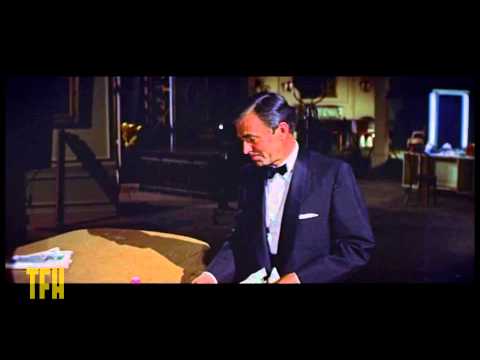
Based on an article in the New Yorker, Nicholas Ray's Bigger Than Life stars James Mason (who also produced the film) as elementary school teacher Ed Avery, a thoughtful, gentle man, with a loving wife, Lou (Barbara Rush), and a young son, Richie (Christopher Olsen), who loves him. Avery is successful and well liked in his community, but he is over-extended in his pursuit of the American dream -- he secretly works a second job to earn extra money, and doesn't dare break stride, despite the increasingly painful physical spasms that he suffers. He collapses one day, and the doctors inform him that he suffers from an arterial disease that will probably give him less than a year to live. But they also offer him one hope, with treatment using cortisone, which was then a new, not-fully-tested drug. Avery makes a seemingly full recovery and returns to work, but it soon becomes clear that he's not the same -- he has a new, cavalier attitude toward money, and then Lou becomes alarmed over his expressions of rage over seemingly insignificant annoyances. He starts expressing himself in grand, exalted terms, first to Lou and then to his colleagues at school, including his closest friend, Wally Gibbs (Walter Matthau). And matters only get worse when Wally determines that it is the cortisone -- which Ed has been taking in far greater doses than prescribed -- that is making him act this way. And his obsession w ith forcing Richie to live up to his full potential soon turns into a much darker fixation. Director Ray later offered regret over having used cortisone by name, as it was still not standard treatment and its benefits and drawbacks weren't known. But this did lend the movie a verisimilitude that was essential for what appeal it did hold for audiences. (Seven years later, screenwriter William Read Woodfield would incorporate Bigger Than Life's cortisone plot device into his script for the Voyage To The Bottom of the Sea episode \"Mutiny\". Bigger Than Life's more immediate problem at the time lay in its broader plot -- with a story that brought drug addiction and fact-based psychological unhingement into a suburban American setting, it was a daring subject for its time, for which audiences were unprepared in 1956. It was also one of a group of offbeat pictures that Mason produced as well as starred in. ~ Bruce Eder, All Movie Guide
DVD Review:
Criterion brings us a little seen but highly regarded classic, and Casey writes, "... Nicholas Ray's groundbreaking Bigger Than Life [is] a claustrophobic, small-scale portrait of 1950s suburbia torn apart by a family man's addiction to prescription codeine. James Mason (who also produced) gave a defining performance in the lead role, undergoing a gripping transformation from middle class dad to psychotic would-be prophet of anti-middle class revolution. Released in 1956 to a largely negative reception, it's no surprise that Americans of the 1950s - eased into self-satisfaction with the realization of the postwar American dream - rejected this depiction of small town lives being violently rent asunder by a repressed subconscious cut loose.
"Ed Avery (Mason) is a middle class schoolteacher, who lives in a large house on a pleasant street with his wife Lou (Barbara Rush) and young son Bobby (Christopher Olsen). Plagued by mysterious recurring pain, Avery is prescribed codeine, a then-new 'miracle drug' that saves his life. The side effects, however, cause creeping madness in Avery, who begins to envision himself as a hero to society, the savior of his family, and the protector of all morality and ethics. With the help of his friend Wally (Walter Matthau), Lou struggles to escape Ed's increasingly tight clutches and seek aid from his doctors.
"There is a lot in this film that prefigures David Lynch's Blue Velvet, primarily the conception of suburban life as harboring deep-set layers of delusion and darkness beneath the well-manicured lawns and shiny, detailed vehicles. Also of note in this sense is the production design, which utilizes dark, saturated earth tones that anticipate the palette of Lynch's film - there are huge walls of deep gray-green and slate blue, as well as dull browns and tans. These heavy colors absorb light, sapping the environment of happiness - especially in the case of the Averys' home. As Ed's madness grows, Lou and Bobby are effectively made prisoners in the house, and it's at this point (about midway through the film) that the set grows into a frightening, oppressive character all its own. Those colors make the walls look impenetrable, and the house begins to bear down upon the family like looming death.
"Bigger Than Life is a unique contribution to American cinema of the 1950s. A wholly original and very dark look at the rip current beneath the surface of suburban existence, its relevance and impact are, if anything, stronger today than ever before. Mason's performance alone makes this worth a look, but a solid screenplay and imaginative direction by Ray push it into 'classic' territory."
|
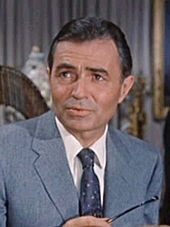
James Mason | Ed Avery |

|
Barbara Rush | Lou Avery |
|
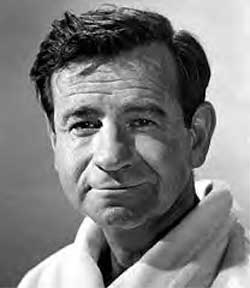
Walter Matthau | Wally Gibbs |
|
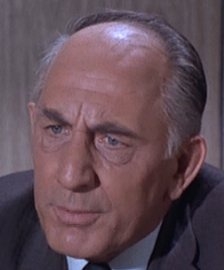
Robert F. Simon | Dr. Norton |

|
Christopher Olsen | Richie Avery |
|
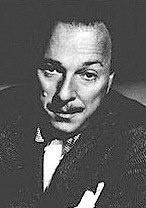
Roland Winters | Dr. Ruric |
|
Rusty Lane | Bob LaPorte |

|
Rachel Stephens | Nurse |
|
Kipp Hamilton | Pat Wade |
|
|
Dee Aaker | Joe |
|
|
David Bedell | X-Ray Doctor |
|
Gail Bonney | Mother at PTA Meeting |
|
|
Harold Bostwick | Gentleman |
|
Lovyss Bradley | Churchgoer |
|
|
Ann Cameron | Churchgoer |
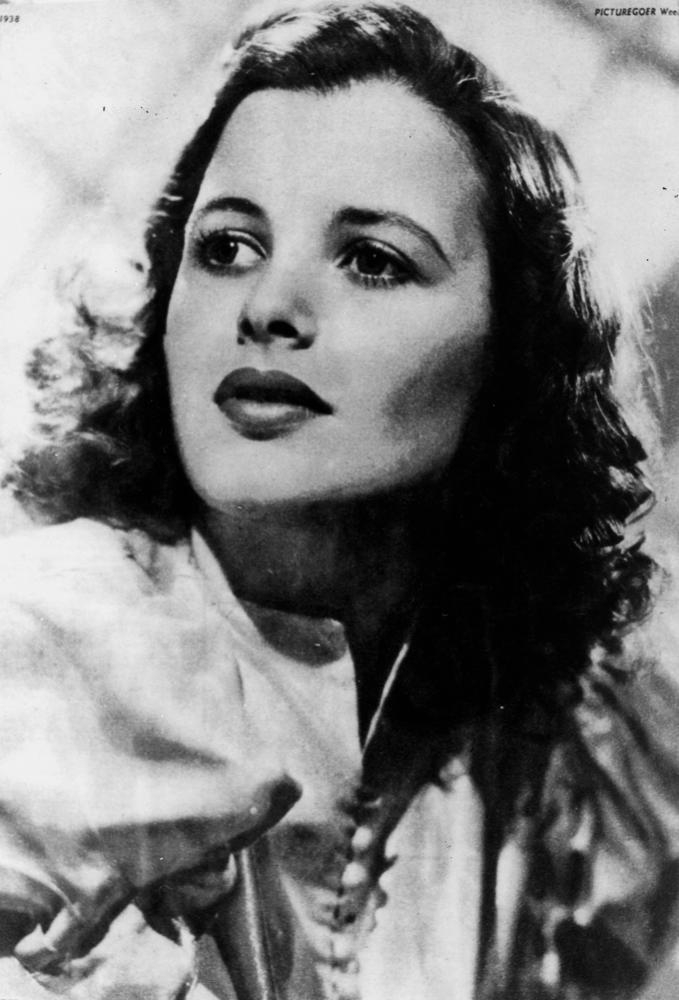
|
Mary Carroll | Mother at PTA Meeting |
|
Virginia Carroll | Mrs. Jones |
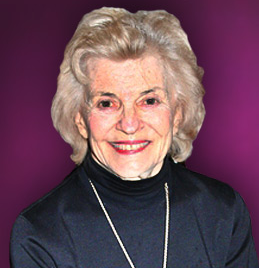
|
Mary Carver | Saleslady |
|
|
Betty Caulfield | Mrs. LaPorte |
|
Lonny Chapman | Man at PTA Meeting |
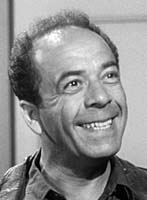
|
Lewis Charles | Dr. MacLennan |
|
|
George Chester | Janitor |
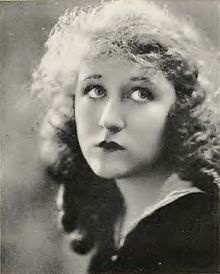
|
Ruth Clifford | Churchgoer |

|
Richard Collier | Andy |

|
Fred Dale | Male Nurse |
| Director | Nicholas Ray |

|
| Writer | Cyril Hume, Richard Maibaum, Burton Roueche, James Mason, Gavin Lambert, Clifford Odets, Nicholas Ray | |
| Producer | James Mason | |
| Musician | David Raksin | |
| Photography | Joseph MacDonald | |
| Edition | Criterion |
|---|---|
| Packaging | Keep Case |
| Nr Discs | 1 |
| Screen Ratios | Anamorphic Widescreen (2.35:1) |
| Audio Tracks | ENGLISH: Dolby Digital Mono [CC] |
| Layers | Single side, Dual layer |
| Edition Release Date | Mar 23, 2010 |
| Regions | A |