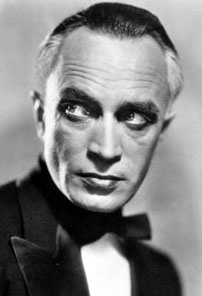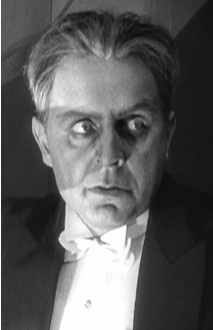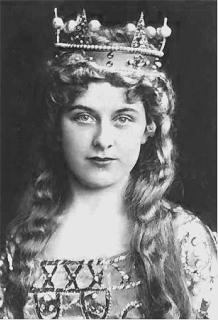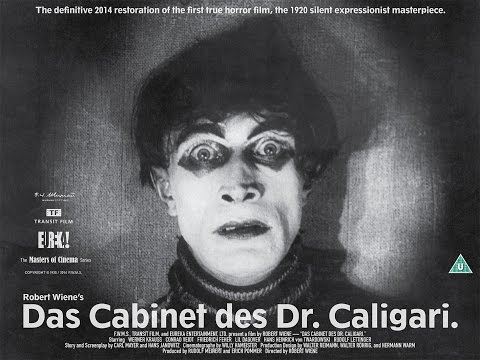


A milestone of the silent film era and one of the first "art films" to gain international acclaim, this eerie German classic from 1919 remains the most prominent example of German expressionism in the emerging art of the cinema. Stylistically, the look of the film's painted sets--distorted perspectives, sharp angles, twisted architecture--was designed to reflect (or express) the splintered psychology of its title character, a sinister figure who uses a lanky somnambulist (Conrad Veidt) as a circus attraction. But when Caligari and his sleepwalker are suspected of murder, their novelty act is surrounded by more supernatural implications. With its mad-doctor scenario, striking visuals, and a haunting, zombie-like character at its centre, Caligari was one of the first horror films to reach an international audience, sending shock waves through artistic circles and serving as a strong influence on the classic horror films of the 1920s, 30s, and beyond. It's a museum piece today, of interest more for its historical importance, but The Cabinet of Dr Caligari still casts a considerable spell. --Jeff Shannon, Amazon.com
|
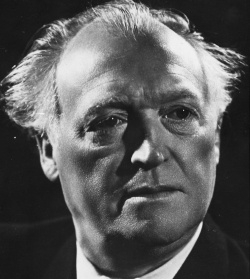
Werner Krauss | Dr. Caligari |
|
Conrad Veidt | Cesare |
|
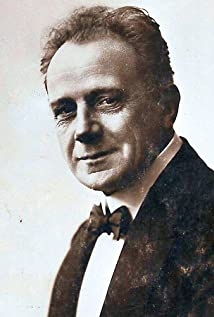
Friedrich Feher | Franzis |
|
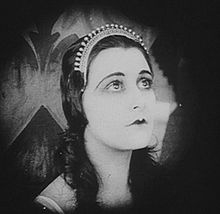
Lil Dagover | Jane Olsen |
|
Hans Heinrich von Twardowski | Alan |
|
Rudolf Lettinger | Dr. Olsen |
|
Rudolf Klein-Rogge | Ein Verbrecher |
|
Hans Lanser-Rudolf | Ein Alter Mann |
|
Henri Peters-Arnolds | Ein Junger Arzt |
|
Ludwig Rex | Ein Mörder |
|
Elsa Wagner | Die Wirtin |
| Director | Robert Wiene |
|
| Writer | Carl Mayer, Hans Janowitz | |
| Producer | Rudolf Meinert, Erich Pommer | |
| Musician | Alfredo Antonini, Giuseppe Becce, Timothy Brock, Clifton Hyde, Michael Klubertanz, Richard Marriott, Lothar Prox, Didier Thunus, Rainer Viertelboeck | |
| Photography | Willy Hameister | |
| Nr Discs | 1 |
|---|---|
| Screen Ratios | Fullscreen (4:3) |
| Audio Tracks | English Dolby Digital 2.0 |
| Edition Release Date | Oct 15, 1997 |
| Regions | Any Region |