Follows the Soviet dictator's last days and depicts the chaos of the regime after his death.
Moscow, 1953. After being in power for nearly 30 years, Soviet dictator, Joseph Vissarionovich Stalin, takes ill and quickly dies. Now the members of the Council of Ministers scramble for power.
In early-1953 Moscow, under the Great Terror's heavy cloak of state paranoia, the ever-watchful Soviet leader, Joseph Stalin, collapses unexpectedly of a brain haemorrhage. As a result, when someone discovers his body the following morning, a frenetic surge of raw panic starts spreading like a virus among the senior members of the Council of Ministers, as they scramble to maintain order, weed out the competition, and ultimately take power. But in the middle of a gut-wrenching rollercoaster of incessant plotting, tireless machinations, and frail allegiances, absolutely no one is safe; not even the feared chief of the secret police, Lavrenti Beria. In the end, who will prevail after the death of Stalin?
—Nick Riganas
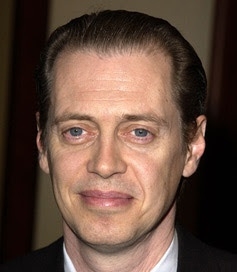
Moscow, 1953. After being in power for nearly 30 years, Soviet dictator Joseph Vissarionovich Stalin (Adrian McLoughlin) takes ill and quickly dies. Now the members of the Council of Ministers scramble for power. At the forefront of the machinations is N.K.V.D. Chief Lavrentiy Pavlovich Beria (Simon Russell Beale), after Stalin, the most feared man in the U.S.S.R. Council member Nikita Sergeyevich Khrushchev (Steve Buscemi) does his best to maintain order and thwart Beria's plans.
—grantss
In the Soviet Union, everyone is used to Jozef Stalin's reign of terror, with daily lists of arrests for torture, banishment, or execution. When Stalin calls a radio producer for the recording of a 1953 concert, he realizes nobody was recording it and hastily arranges for a second turn, keeping even the audience in, despite having to replace the knocked-out director and bribing the soloist, who slips in a note reviling Stalin for having her kin killed. Reading that, Stalin has a fatal cardiac arrest. It takes hours till anyone dares enter his closed office, then ministers argue how to handle his death and struggle to find competent doctors--most having been purged--and are startled: the diagnosis is coma without realistic recovery prospect. Still political alliances are forged for the next Communist reign, including roles for Stalin's arrogant daughter Svetlana and maverick military son Vasily, both overambitious. The former deputy presides over funeral and formal power transfer preparations but especially security chief Beria and Khrushchev plot to become the one purging rather than purged, while inconvenient witnesses are on the next execution lists.
—KGF Vissers
Farcical imagining of the 1953 goings-on in Moscow in what can be seen as the absurdity of the real life actions of the main players, those actions albeit horrific. Having led the Soviet Union in terror for thirty years with the power of his NKVD security forces to carry out that terror for the last twenty, Joseph Stalin, still relatively healthy and after listening to a live musical broadcast on Radio Moscow for which he wants the non-existent recording immediately, surprisingly drops dead, or so those around him believe as the Party has no expert to tell them so having previously killed all the doctors in Moscow. Those in the inner circle of the Party, while preparing for the State funeral according to Party policy, jockey for position, sometimes openly and sometimes behind the scenes, for their preferred place in the post-Stalin Soviet Union, the worst of those places proverbially six feet under as much of that jockeying is in direct opposition to someone else in that circle. That inner circle is comprised of: Nikita Khrushchev, First Secretary of the Moscow Committee; Vyacheslav Molotov, Foreign Secretary; Georgi Malenkov, Deputy to Stalin; Lazar Kaganovich, Minister for Labor; Anastas Mikoyan, Minister for Trade; Nikolai Bulganin, Minister for Defense; and arguably most terrifying Lavrenti Beria, Head of the NKVD. In that jockeying, the players try to curry the favor of: Stalin's two adult children, Svetlana Alliluyeva and Vasili Stalin, who are also not only looking for their future place, which could easily be the way of their father without his protection, but are looking for answers as to what happened; and Field Marshal Georgi Zhukov, Head of the Soviet Army, who has the manpower of the said army behind him.
—Huggo
SYNPOSIS
After a live Radio Moscow broadcast of Mozart's Piano Concerto No. 23, Joseph Stalin (Adrian Mcloughlin) calls the station and orders a recording. Stalin has been in power for over 30 years now and his word is the law across the Soviet Union.
The performance was not recorded. Not wanting to anger Stalin, the station rapidly re-stages the performance, bringing people off the street to replicate the acoustics, fetches a new conductor to replace the original one, who has passed out, and orders the orchestra to play again and bribing the disgruntled lead pianist Maria Yudina (Olga Kurylenko), who initially refuses to perform for the cruel dictator.
Maria hides a note in the pressing of the recording telling Stalin he has ruined the country. Stalin is hosting a tense, but rowdy, gathering of Central Committee members at his home, the Kuntsevo Dacha. As Foreign Minister Vyacheslav Molotov leaves, NKVD head Lavrentiy Beria reveals to Nikita Khrushchev and Deputy Chairman Georgy Malenkov that Molotov is to be part of the latest purge. As it is late at night, the Central Committee members leave. Before leaving Beria hands over the list approved by Stalin (which is 4 pages long) to his officers and to arrest everyone whose name is on it. The officers arrange squads to carry out Beria's orders in the middle of the night.
When the concert recording arrives, Stalin finds a note Maria slipped in the record sleeve, admonishing Stalin and expressing hope for his death. He reads it, laughs, and suffers a cerebral hemorrhage. Despite hearing him fall, Stalin's guards do not enter his office, fearful of being punished for disturbing him.
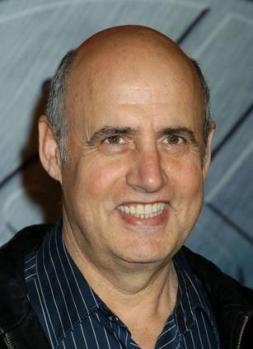
Stalin's housemaid discovers him unconscious the next morning, and the members of the Central Committee are alerted. The first to arrive are NKVD head Lavrentiy Beria (Simon Russell Beale), who discovers Maria's note, and Deputy General Secretary Georgy Malenkov (Jeffrey Tambor). As Malenkov panics, Beria guides him to take leadership, hoping to use him as a puppet.
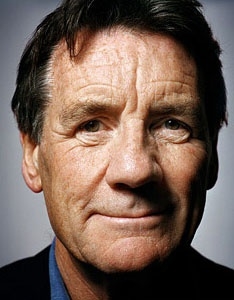
Moscow Party head Nikita Khrushchev (Steve Buscemi) arrives with the rest of the Committee, except for Foreign Minister Vyacheslav Molotov (Michael Palin), whom Stalin added to one of his lists of enemies the night previously. The Committee finally decide to send for a team of doctors. Most of the best doctors in Moscow have been arrested for being part of the "Doctors' plot" and so the doctors who can be found are not impressive. After a brief bout of terminal lucidity, Stalin dies.
Beria closes off Moscow, has the NKVD take over city security duties from the Red Army, and replaces Stalin's enemy lists with his own, reprieving Molotov. Khrushtev and Beria struggle for symbolic victories such as control over Stalin's unstable son Vasily (Rupert Friend) and daughter Svetlana (Andrea Riseborough). When Stalin finally dies, the Committee members rush back to Moscow as the NKVD loot Stalin's dacha and execute witnesses.
Khrushchev goes to Molotov's home and attempts to enlist him, but Molotov, a true believer in Stalinism, opposes any factionalism within the Party. Beria buys his loyalty by releasing his wife Polina Zhemchuzhina from confinement.
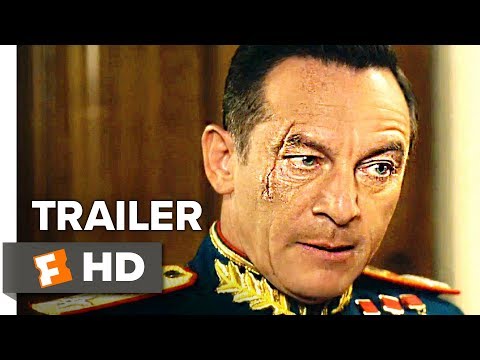
Malenkov is named as nominal Premier while being largely controlled by Beria. At the first Committee meeting following Stalin's death, Beria sidelines Khrushchev by putting him in charge of Stalin's funeral and suggesting many of the liberal reforms which Khrushchev had planned to introduce. Stalin's body is laid in state in the Hall of Columns for three days, while many political prisoners are released and restrictions on the Russian Orthodox Church are loosened, earning Beria more popular support. Field Marshal Georgy Zhukov (Jason Isaacs) demands to know why his Red Army has been confined to barracks within Moscow.
Beria learns that Khrushchev has a passing acquaintance with Maria, who was hired to play at the funeral, and threatens them both with the note. Khrushchev approaches Zhukov, who agrees to provide the Army's support in a coup to overthrow Beria, but only if the Committee agrees.
To undermine Beria's popularity, Khrushchev orders the trains into Moscow to resume, allowing thousands of mourners into the city. As he planned, the NKVD guards around the Hall fire on the crowd, killing 1,500 people. The Committee suggests scapegoating low-level NKVD officers. As Beria believes blame attached to security services will tarnish him, he angrily threatens the Committee with incriminating documents he has collected on them. Molotov secretly tells Khrushchev and Kaganovich he will support the coup if they can enlist the support of the others, including Malenkov.
Irate over the supplanting of the military by the NKVD, Marshal Georgy Zhukov agrees to support Khrushchev in a coup against Beria, provided it occurs after Stalin's funeral the next day and Khrushchev can get the rest of the Committee on board in time. Khrushchev fails to find time to discuss his plan with Malenkov. On the day of Stalin's funeral, Khrushchev lies to the Committee and Zhukov that he has Malenkov's support. Khrushchev gives Zhukov the green-light, and the Soviet Army reclaims its posts from the NKVD. The Red Army overwhelms the NKVD and takes up positions in the toilets next to the conference room.
Zhukov, assisted by a group of soldiers led by Kiril Moskalenko and Leonid Brezhnev, storms into a meeting of the Committee and arrests Beria, and Khrushchev coerces Malenkov into signing the papers for Beria's trial.
Malenkov does not intervene and reluctantly signs Beria's death warrant, horrified at what Beria had done to his victims. At Beria's emergency trial, Khrushchev accuses him of counter-revolutionary activities, sexual assault, and pedophilia, and immediately declares him guilty after evidence of the final accusation is delivered by the Soviet Army. Beria begs for his life but is summarily shot in the head, and Zhukov has his body burned in the courtyard.
Despite Svetlana's protests, Khrushchev sends her to Vienna, while keeping Vasily in Russia, where he can be watched. He concurs with Kaganovich that Malenkov is too weak to lead. In 1956, Maria is once again performing the Mozart concerto. Having triumphed over other members of the Committee to become the new leader of the Soviet Union, Khrushchev attends. Brezhnev, who will succeed Khrushchev in 1964, eyes Khrushchev from his seat.


 English
  Nederlands
  Deutsch
  Français
  Español
  Magyar
  српски
  Dansk
Dansk  Italiano
  Svenska
  Slovenčina
  Português