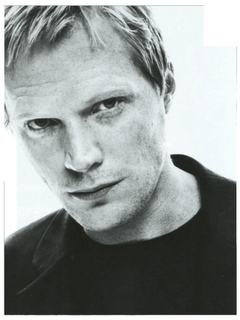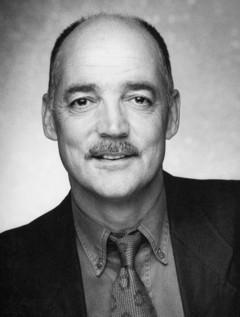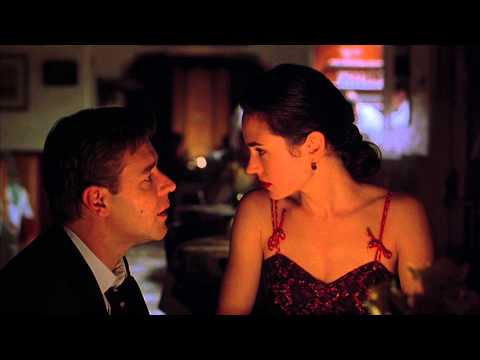


At Princeton University, John Nash struggles to make a worthwhile contribution to serve as his legacy to the world of mathematics. He finally makes a revolutionary breakthrough that will eventually earn him the Nobel Prize. After graduate school he turns to teaching, becoming romantically involved with his student Alicia. Meanwhile the government asks his help with breaking Soviet codes, which soon gets him involved in a terrifying conspiracy plot. Nash grows more and more paranoid until a discovery that turns his entire world upside down. Now it is only with Alicia's help that he will be able to recover his mental strength and regain his status as the great mathematician we know him as today.
|
Russell Crowe | John Nash |
|
Ed Harris | Parcher |
|
Jennifer Connelly | Alicia Nash |
|
Christopher Plummer | Dr. Rosen |
|
Paul Bettany | Charles |
|
Adam Goldberg | Sol |
|
Josh Lucas | Hansen |
|
Anthony Rapp | Bender |
|
Jason Gray-Stanford | Ainsley |
|
Judd Hirsch | Helinger |
|
Austin Pendleton | Thomas King |
|
Vivien Cardone | Marcee |
|
Jill Marie Simon | Bar Co-Ed |
|
Victor Steinbach | Professor Horner |
|
Tanya Clarke | Becky |
|
Thomas F. Walsh | Captain |
|
Jesse Doran | General |
|
Kent Cassella | Analyst |
|
Patrick Blindauer | MIT Student |
|
John Blaylock | Photographer |
|
Roy Thinnes | Governor |
|
Anthony Easton | Young Man |
|
Cheryl Howard | Harvard Administrator |
|
Rance Howard | White-Haired Patient |
|
Jane Jenkins | Code-Red Nurse |
| Director | Ron Howard |
|
| Writer | Akiva Goldsman, Sylvia Nasar | |
| Producer | Brian Grazer, Todd Hallowell, Ron Howard, Karen Kehela Sherwood, Kathleen McGill, Maureen Peyrot, Aldric La'Auli Porter, Louisa Velis | |
| Musician | James Horner | |
| Photography | Roger Deakins | |
| Packaging | Keep Case |
|---|---|
| Nr Discs | 2 |
| Screen Ratios | Anamorphic Widescreen (1.85:1) Widescreen (1.85:1) |
| Audio Tracks | Dolby Digital 5.1 [English (Closed Captioned)] Dolby Digital 5.1 [English] Dolby Digital 5.1 [French] Dolby Digital Surround [English] |
| Subtitles | Spanish |
| Layers | Single side, Dual layer |
| Edition Release Date | Jun 25, 2002 |
| Regions | Region 1 |
| Watched | |
|---|---|
| Index | 42 |
| Added Date | Mar 10, 2012 13:58:28 |
| Modified Date | Jun 12, 2022 00:31:56 |
WSR Narrative Review
Story Synopsis:
John Forbes Nash, Jr. (Crowe) has “A Beautiful Mind,” one which would earn him the Nobel Prize. His future seemed bright in the early '50s after he married Alicia (Connelly) and made remarkable advancements with his genius. But Nash’s mind crumbled under the stress of top-secret duties for the military, unleashing the hazy reality of mental illness. Based on the novel by Sylvia Nasar. (Suzanne Hodges)
DVD Picture:
The anamorphically enhanced 1.85:1 DVD exhibits a pleasing picture, with images that are nicely detailed, though slightly soft at times. Colors are often rendered with warm hues that complement the storytelling, much of which takes place during the ’50s. The picture can have a somewhat smeared appearance at times, but overall quality is quite satisfying. Contrast and shadow delineation are nicely balanced. There is some pixelization noticed, and edge enhancement can be distracting at times. The source element is revealing of some film grain. (Suzanne Hodges)
Soundtrack:
The Dolby® Digital 5.1-channel discrete soundtrack is an excellent recording. Much of the audio for this movie can be interpreted as more reserved in dimension than usual for a cutting-edge 5.1 soundtrack, yet there is a consistently palpable sense of atmosphere and immersion. This is one of the best sound mixes encountered thus far with conveying even subtle instances of space and holosonic settings. The subtlety of dimension belies the sheer creativity in creating an effectively wide, palatably enveloping soundstage. And speaking of creativity, there's some interesting POV sequences for which the directional placement of sound plays a pivotal role, such as in Chapter 6, as Nash is deciphering a code. In Chapter 16, a key moment in the film, the surrounds are dramatically enlivened with the music, as part of the heightened visceral undertone of the scene. Another standout aspect of this soundtrack is James Horner's music score, which is an excellent recording and has a rich, full-bodied presence throughout the listening space. The dialogue is also a remarkable production, with voices sounding very natural in terms of tonality and spatial integration. The low-end is noticed mostly with the music, with an articulate, well-defined presence. This is a wonderful soundtrack that effectively utilizes space and state-of-the-art sound production to its advantage. (Perry Sun)
This Disc Contains The Following WSR-Rated Superb Qualities:
Superb Music Score Recording Quality
Superb Cinematography