

Through The Wormhole
A féreglyukon át 2. évad
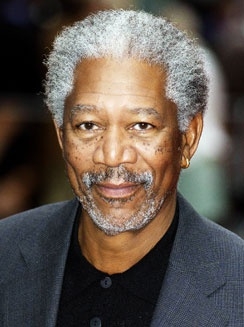
Hosted by Morgan Freeman, Through the Wormhole will explore the deepest mysteries of existence — the questions that have puzzled mankind for eternity.
What are we made of? What was there before the beginning? Are we really alone? Is there a creator? These questions have been pondered by the most exquisite minds of the human race. Now, science has evolved to the point where hard facts and evidence may be able to provide us with answers instead of philosophical theories.
Through the Wormhole will bring together the brightest minds and best ideas from the very edges of science — Astrophysics, Astrobiology, Quantum Mechanics, String Theory, and more — to reveal the extraordinary truth of our Universe.
Science is a long way from answering the question posed in this program. But exploring it has proved a fertile avenue for investigation into what exactly is consciousness and self-awareness.
To the average person it seems obvious that the universe must have an edge. Yet most cosmologists think that like a ball, or more likely a bagel, the universe has no end, other then a temporal one - a beginning and, perhaps, an end. But several scientists agree with the common man that there is an edge to the universe and they have some definite ideas about what is beyond the edge and how to prove their case.
After a brief explanation of how we measure time this program takes a detailed look at how we perceive time. Then it's time for the physicists to present their ideas about what time is before Steve Weinstein talks about two dimensional time.
To scientists it looks like the weakness of gravity, the existence of dark matter and the big bang may all be dependent on how many dimensions there are to the universe. But are the three dimensions we're used to too few or too many? This program examines the pet theories of several scientists about the dimensionality of our universe, how they are going about proving their theories and why their theories don't agree with the three dimensions that seem obvious to us.
Several scientists have conducted experiments, although with somewhat questionable controls, that suggest humans may have a rudimentary capabilities for telepathy and precognition. This program reviews the studies and the scientists speculate about how these capabilities may work and why we might have them.
This program presents the scientific foundation for parallel universes. Then it reviews the various speculative ideas scientists are exploring about how universes form and how they interact. In our explorations we bump into our old cosmic friends; black holes, white holes, dark matter and the big bang.
A revolution in science is underway that will transform life on Earth and ensure our survival as a species. If we can solve the equation of everything, it will present the keys to creation itself.
The laws of physics allow a variety of ways to get around the universe faster than the speed of light. These prospects are explained along with the daunting engineering challenges of making them practical and safe.
This program reviews current thinking about what causes death and aging. Then it examines increasingly bizarre ideas about how to prevent them.
This program gives serious consideration to what life forms on other planets might look like founded on the vast diversity of life on earth now and in the past and what is now known about the environments on other planets found by the Kepler telescope. Then it indulges in a little speculation about what extra-terrestrial intelligence might be like.
|
Morgan Freeman | Self - Narrator |
|
Albert Einstein | Self - Theoretical physicist |
|
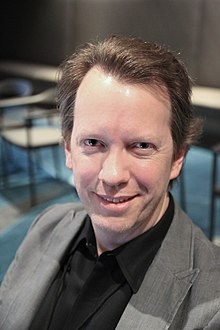
Sean Carroll | Self - Physicist / California Institute of Technology |
|
Michio Kaku | Self - Theoretical Physicist |
|
Marcus Natividad | Suzuki Watamura |
|
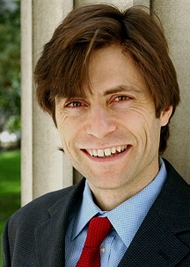
Max Tegmark | Self - Theoretical Physicist |
|
Lee Smolin | Self - Theoretical physicist |
|
Chris Trouble Delfosse | Trouble |
|
David Eagleman | Self - Neuroscientist |
|
Julian Barbour | Self - Physicist |
|
Frank Tipler | Self - Mathematical Physicist |
|
Tim Maudlin | Self - Philosopher of Physics |
|
Steve Weinstein | Self - Perimeter Institute |
|
Barack Obama | Self |
|
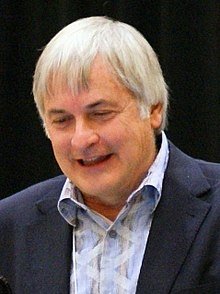
Seth Shostak | Self - Senior Astronomer / SETI Institute |
|
Edwin Hubble | Self - Astronomer |
|
Sara Seager | Self - Astrophysicist / MIT / Cambridge |
|
Janna Levin | Self - Theoretical Physicist |
|
Christie Campagna | Self |
|
Kelsi Cullimore | Self |
|
Paul Steinhardt | Self - Theoretical Physicist / Princeton University |
|
Miguel Alcubierre | Self - Physicist |
|
Stuart Hameroff | Self - Phd / . Anesthesiologist / University of Arizona |
|
Michael Persinger | Self - Cognitive Neuroscience Researcher |
|
Dean Radin | Self - Institute for Noetic Science |
| Lemezek száma | 1 |
|---|
| Hely | HDD 26 |
|---|---|
| Index | 1571 |
| Hozzáadva | Júl. 01, 2014 18:36:33 |
| Módosítva | Feb. 18, 2023 14:47:53 |