The Planets
Employing state-of-the-art computer graphics, unseen space race archive and testimony from leading scientists, THE PLANETS is the most comprehensive and spectacular account of space exploration and discovery ever made.This double DVD contains all eight 50-minute episodes:I Different WorldsThis first part of 'The Planets' looks at the early attempts at space travel, from the rocket pioneers of the inter-war years to the launch of Mechta in 1959 - which flew wide of the moon by 6000 km and is now consigned to an endless journey around the sun... We also see how the very latest space explorations reveal just how different the planets are from each other. How were they created? Knowing this brings us to a more accurate model of how the Solar System itself came to be.II Terra FirmaThis is the story of the pioneering missions to our neighbouring worlds and of our first glimpses of their awe-inspiring terrains. From the giant lava plains of Venus, to the volcanoes on Mars that would dwarf Mount Everest, 'Terra Firma' takes us on a grand geological tour of the most amazing vistas in our planetary neighbourhood. It recounts the gripping stories behind these most inspiring scientific adventures and discovers that - against all odds - the Solar System is very much alive...III GiantsFor centuries, scientists have been trying to uncover more about the massive planets which lurk in the far flung reaches of the Solar System. 'Giants' retraces these endeavours, from Galileo's sighting of Jupiter''s moons in 1610 to the most successful probes in the hstory of space exploration - Voyager 1 and Voyager 2. And at the cutting edge of current research, it takes us with the Voyager spacecraft on the journey of a lifetime, to the secret hearts of Jupiter, Saturn, Uranus and Neptune - the mysterious giants of our Solar System.IV MoonNothing could be more familiar to human eyes than the Moon. And yet nothing could be stranger. None of our near neighbours in the Solar System - Mercury, Venus or Mars - has a moon like ours, a companion in space so large that it rules our nights, our months, our ocean tides. Why Earth should have such a moon is one of the deepest mysteries of the Solar System. 'Moon' delivers the latest explanations and also takes a fascinating look at the 'space race' years - when the Cold War powers battled to achieve the first lunar landing.V StarFrom the very beginning, mankind has looked up to Earth's star - the Sun - and worshipped it as a god. Science has shown it to be otherwise, but it has also shown that the Sun is more powerful than anything our Sun-worshipping ancestors could have imagined - it alone accounts for 99.8% of all matter in the Solar System. 'Star' shows us how the Space Age has given us a new perspective on the Sun and joins the Voyager spacecraft on a mission in search of its outer edge.VI AtmosphereThe Solar System presents a dazzling array of alien weather: Venus (the crushing inferno where oceans have boiled off into the sky), Mars (a frigid desert whose oceans are frozen deep within its crust) and Jupiter (a world of storms that plunge for thousands of kilometres yet never whip solid ground). 'Atmosphere' takes us on a fantastic voyage through the skies of the Solar System, discovering the atmospheres of our fellow planets. It also introduces us to the engineers behind the incredible space probes which are delivering these images to us.VII LifeEver since mankind realised that the Earth was not the centre of the Universe, we have asked ourselves the question: are we alone? Could the seed of life have taken root on other planets? Our first searches revealed a desolate Solar System. But perhaps we have been looking in the wrong places.VIII DestinyOur star, the Sun, created our Solar System and in an act of cosmic cannibalism will engulf and destroy it. But the planets will see many changes before the light of our star goes out. 'Destiny' explores the evolution of the planets over the next four billion years, as Mars and Titan warm up, Mercury and Venus go into meltdown, and the gas around the Giants slowly blows away.
Travel back in time and space to witness the awesome forces that gave birth to the Sun and the far-flung family of planets that orbit it. From the rocky, superheated surface of Mercury, to the storm-wracked atmosphere of gigantic Jupiter and the distant mysteries of Pluto, this is a richly detailed introduction to the creation, composition and alien landscapes of The Planets.
Relive the thrill of first glimpses of otherworldly terrain as you join the early quest to discover the true nature of our planetary neighbours. Pierce the toxic clouds of Venus to map ancient lava flows the size of continents. Visit a Martian volcano taller than Mount Everest and head even further out into the planetary system in search of clues to the "living" geological forces at work in the most unlikely cosmic corners.
They are the heavyweights of the planetary line up. There are unimaginable vast orbs of seething gas and brilliant could bands that contain virtually no landscapes. Now, take a closer look at these planetary behemoths.
While a number of planets are accompanied by moons of all sizes and compositions, only the Earth boasts such a comparatively huge "companion world." What forces could have resulted in this planetary odd couple? Join the search for the answer to one of the solar system's most baffling mysteries, from Cold Warrior scientists racing to be first on the moon, to current theories and remarkable computer-generated visions of the moon's explosive creation.
To primitive peoples, the Sun was synonymous with God - the ultimate source of life-giving warmth and light. Now, step aboard with the Skylab space station to probe the turbulent heart of our local power source. Plunge into the centre of the Sun to witness the reactions driving its primordial atomic pulse. And observe the spectacle of massive solar flares capable of engulfing entire planets - including our own.
Atmospheres make weather. This can result in alien weather reports that seem as if they're right our of a science program: torrential sulphuric rain and metallic snow on Venus, global dust storms raging across Mars and centuries-long, Earth-sized cyclones circling Jupiter. It's an eye-opening exploration of other worldly weather that reveals the surprising variety and force of atmospheric activity throughout the solar system.
From the startling Copernican revelation that the Earth was not the centre of the Universe, humanity has wondered if life is unique to our world. But how likely is it that the Earth is the only reservoir of life in the vastness of space? Come along for the ride as early planetary researches learn that conditions on our neighbouring planets may be too hostile to support life and discover how recent findings hint there may be alien life "hiding out" in places we've overlooked.
What is the long-term fate of the planets in our solar system? Voyage to a future billions of years in the distance. Explore the Sun's expansion as it engulfs its planetary progeny in the final, fiery act of its billion-year long dilemma.
|
Mark Halliley | Self - Narrator |
|
Donald Black | Self |
|
Jerry Soften | Self |
|
Sasa Vasilievski | Self |
|
Carolyn Porco | Self - University of Arizona |
|
Charles Conrad | Self - Commander / Apollo 12 |
|
Boris Chertok | Self - Rocket Designer |
|
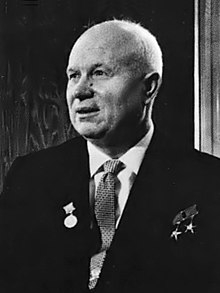
Nikita Khrushchev | Self |
|
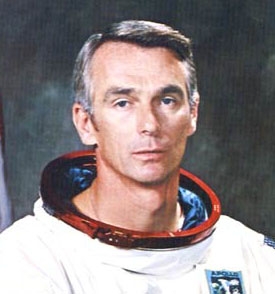
Eugene Cernan | Self - Apollo 17 Astronaut |
|
Chris McKay | Self - NASA Ames Research Center |
|
Carl Sagan | Self - Astronomer |
|
William Hartmann | Self - Planetary Science Institute / Arizona |
|
Larry Soderblom | Self - US Geological Survey / Arizona |
|
Sergei Khrushchev | Self - Brown University / Rhode Island |
|
Brad Smith | Self - University of Hawaii |
|
Bruce Murray | Self - Director / Jet Propulsion Laboratory / 1976-1982 |
|
Sasha Basilevsky | Self - Vernadsky Institute / Moscow |
|
Douglas Gough | Self - Institute of Astronomy / Cambridge University |
|
Arnold Selivanov | Self - Russian Institute for Space Instruments |
|
Imre Friedmann | Self - Florida State University |
|
Karen Stone | Narrator (for US version) |
|
Gerry Soffen | Self - Viking Mission Scientist |
|
Mikhail Marov | Self - Russian Academy of Sciences |
|
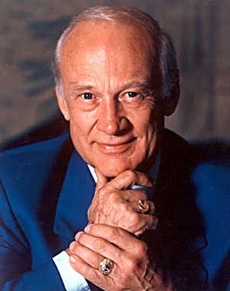
Buzz Aldrin | Self |
|
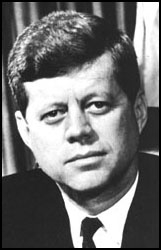
John F. Kennedy | Self |
| Director | David McNab |
|
| Writer | David McNab, James Younger, Jacqueline Smith, Becky Jones | |
| Producer | John Lynch, David McNab, James Younger, Gina Kocjancic, Jacqueline Smith, Becky Jones | |
| Musician | Jim Meacock | |
| Photography | Simon Fanthorpe | |
| Packaging | Keep Case |
|---|---|
| Nr Discs | 2 |
| Layers | Single side, Single layer |
| Regions | Region 2 | Region 4 |
| Purchased | On Nov 12, 2004 at play.com |
|---|---|
| Watched | |
| Index | 1900 |
| Added Date | Sep 08, 2015 20:42:02 |
| Modified Date | Sep 17, 2020 12:07:00 |