

The Universe
The physical processes driving the energetic dynamics of the Sun and the resulting impact on the earth are examined.
Program recaps the basic knowledge about Mars normally covered in high school.
A few of the cosmic threats to life on earth reviewed include meteors, gamma ray bursts and, in the distant future, evolution of the sun.
The Universe examines the stormy gas giant Jupiter and its mini-solar system of over 60 moons.
The unique features of Earth's moon and the processes that shaped it are described. Past theories of the Moon's formation are also presented.
Take a high performance ride through the formation of the third planet from the Sun, Earth. A survivor of one of the most violent "neighborhoods" in the universe, learn how earth was created and discover what creatures hold clues to how life began.
Contrasts the radical differences between Earth and the planets Venus and Mercury. Lessons for life on earth are presented.
Program takes a brief look at the dynamics of Saturn's rings before exploring the unique and amazing features of the planet itself, including the curious behavior at the poles, and recent discoveries about Saturn's exotic moons.
How the various structural types of galaxies form by merging with smaller galaxies is explained and simulated. The preliminary hints at the importance of dark matter in the process are mentioned.
Gravity plays a crucial role in both the birth and death of stars in this detailed review. Various types of stellar collisions are simulated.
New discoveries regarding the Outer Planets are creating a fundamental rethinking of our solar system. Uranus is a toxic combination of hydrogen, helium and methane. Scientists speculate that the planet was knocked on its side after colliding with another body. Neptune's largest moon, Triton, is cold and barren, but some scientists speculate that liquid water might exist under Triton's icy surface. If this is proven true, Triton could be the home to one of the biggest discoveries of all time. Cold and inhospitable, Pluto completes one orbit around the solar system every 248 years. Cutting-edge computer graphics are used to bring the universe down to earth to show what life would be like on other planets, and to imagine what kind of life forms might evolve in alien atmospheres.
Scientist describe the current understanding of exotic stars; magnetars, black holes and quasars with an obsession about how they would kill you. Galaxy collisions are simulated.
In a galaxy filled with a billion stars, in a universe filled with a hundred billion galaxies--are we alone? SETI--the Search for Extraterrestrial Intelligence--is a privately funded project using radio telescopes.
The universe began with a massive expansion, billions and billions of years ago, and it continues to expand with every passing second. The idea that the universe, and man's very existence, began with a "Big Bang" is no longer a topic of debate among most scientists--it is essentially taken as fact.
|
Erik Thompson | Narrator |
|
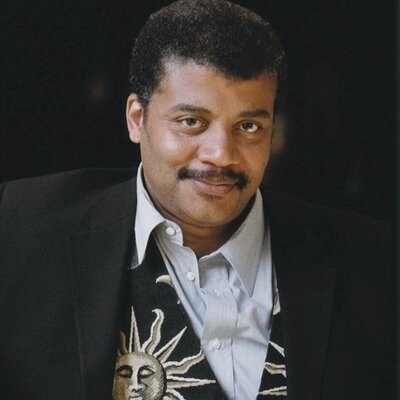
Neil Degrasse Tyson | Self - American Museum of Natural History |
|
Rob Roy Britt | Self - Livescience.com |
|
Galileo Galilei | Self - Astronomer |
|
William Hartmann | Self - Planetary Science Institute |
|
Percival Lowell | Self |
|
Everett Gibson | Self - Johnson Space Center |
|
Alex Filippenko | Self - Univ. of California / Berkeley |
|
Clifford V. Johnson | Self - Univ. of Southern Callifornia |
|
Laura Danly | Self - Griffith Observatory |
|
Edwin Hubble | Self - Astronomer |
|
Mike Brown | Self - CalTech |
|
Michael Mischna | Self - JPL |
|
Adam Showman | Self - University of Arizona |
|
Edward Stone | Self - CalTech |
|
Andrew Ingersoll | Self - CalTech |
|
Kenneth Nealson | Self - Univ. of Southern California |
|
Amanda Hendrix | Self - Jet Propulsion Laboratory |
|
Kevin H. Baines | Self - NASA |
|
Gibor Basri | Self: University of California / Berkeley |
|
Dave Grinspoon | Self - Denver Museum of Nature & Science |
|
Gary Lofgren | Self - NASA |
|
Robin Canup | Self - University of Colorado |
|
Leslie Young | Self - Southwest Research Institute |
|
Jay Pasachoff | Self - Williams College |
| Packaging | Custom Case |
|---|---|
| Nr Discs | 3 |
| Screen Ratios | 1.78:1 |
| Audio Tracks | English Dolby Digital 2.0 Stereo |
| Distributor | A&E Home Video (New REleaset) |
| Layers | Single side, Dual layer |
| Edition Release Date | Nov 18, 2008 |
| Regions | Region |