

 English
  Nederlands
  Deutsch
  Français
  Español
  Magyar
  српски
  Dansk
Dansk  Italiano
  Svenska
  Slovenčina
  Português





1976

TV Series | Documentary | Family
USA | English | Color |

Marty Stouffer's Wild America


Marty Stouffer's Wild America was the first wildlife and nature series to focus exclusively on the wild animals and wild lands of North America.
Hosted by award-winning wildlife photographer and premier naturalist Marty Stouffer the series featured footage of mammals birds reptiles fish and insects throughout the entire continent.
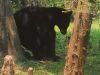
In the eerie backwater bayous of southern Louisiana's Atchafalaya Basin, Marty Stouffer poles a traditional pirogue to track the South's largest animal, a honey-loving legend. Clues lead to a Bobcat, Alligator, Snapping Turtle, and other animals which share this mysterious realm with an elusive phantom -- the Black Bear. Though large, it is now rare in these hardwood bottomlands.
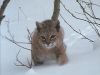
Continuing to search the wild heart of bayou country, Marty finds and follows more clues, meeting creatures both friendly and deadly, before locating the Bear's feeding ground: a pool of Catfish, a surprisingly tricky meal. When an aggressive Alligator moves in during the night, the two legends compete and clash to reveal which will be king of the Catfish pool and the swamp.
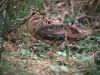
From Bluebells to Bluebirds to Blue Whales -- Nature abounds in examples of this primary hue. And in this wildlife programming departure, we take a lyrical look at the color blue in both the Plant and Animal Kingdoms, explaining some of the reasons why it exists. Some explanations are simple -- others quite complex. Beautiful and bold, this is a wild "Rhapsody in Blue".
"Timberdoodle, Bogsucker, Twister" -- the Woodcock and its nicknames are equally unusual. It flies as slowly as 5 mph, or becomes a blur of speed as it spirals hundreds of feet into the air in a spectacular springtime courtship display. Its life story, from downy young to fall migration, is filmed at Moosehorn Wildlife Refuge in Maine. Moles and Moose also play a part in the story.
Marty follows a wild mink near Lake Superior.
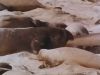
The Pacific Coast's various species of Seals and Sea Lions spend most of their lives roaming the ocean, coming ashore only to give birth and to breed. To best utilize their time gathered on land, both events occur together. January to July is the season when enormous Elephant Seals clash in battle, graceful California Sea Lions frolic, and baby Harbor Seals learn to dare the waves.
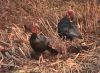
By viewer request, we look at a Bird whose story is woven into our culture. Yet this creature, the Pilgrim's choice for the first Thanksgiving meal, soon became a rarity. Our largest gamebird, with its flamboyant courtship, is a strong flier that prefers to run. We meet the shy Gobblers of our eastern woodlands and their lanky western kin -- forebearers of all domestically raised stock.
Our traditional symbol of Nature's abundance was once feared to be gone as a gamebird due to overhunting by humans and a loss of their habitat. But today, the Wild Turkey is one of game management's greatest success stories. The many who worked so hard for this comeback were perhaps too successful, for some states now worry about having an over-abundance of these birds.
Western diamondback rattlesnakes engage in a ''combat dance'' in an Oklahoma cave.
Managing wildlife most often means managing humans -- the primary predator in virtually all our ecosystems. Through this complex, but vital, process, we constantly try to balance our own conflicting interests with those of our native wild creatures. This thought-provoking program examines some of the most innovative and controversial plans currently operating across the country.
| Nr Discs | 1 |
|---|---|
| Layers | Single side, Single layer |
| Index | 7028 |
|---|---|
| Added Date | Jan 01, 2020 18:03:39 |
| Modified Date | Sep 06, 2024 18:30:58 |