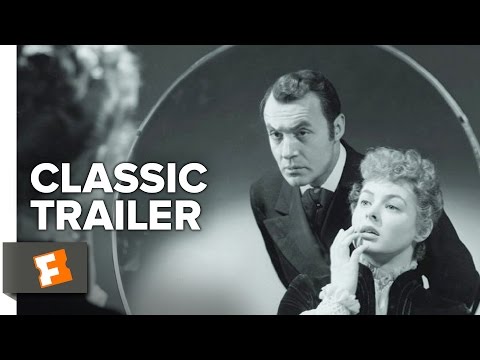
Lights flicker and dim. Footsteps sound from a sealed-off attic. Mysterious events only vulnerable young Paula sees and hears make her fear she's losing her mind - exactly what treacherous spouse Gregory hopes.
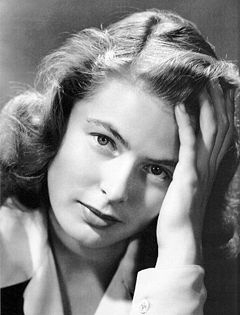
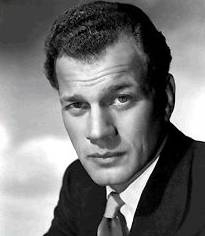
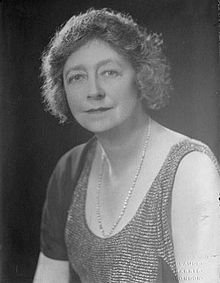
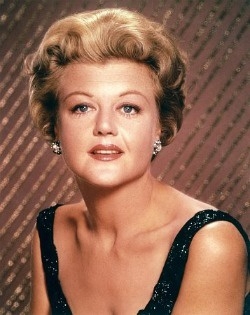
Directed by George Cukor, Gaslight shines as a superb exercise in suspense, Ingrid Bergman won her first Academy Award as Paula, doubting her sanity while clinging to it. Fellow Oscar nominee Charles Boyer skillfully plays against type as smoothly evil Gregory. Joseph Cotten, Dame May Whitty, and then 18-year-old Angela Lansbury inher movie debut (also capturing an Oscar nomination) help make vivid a Victorian era realized in a production design that earned a Best Interior Decoration Academy Award.
Contains both original 1940 British version and 1944 version.
The English original has been almost forgotten in the years since the success of the Cukor/Boyer/Bergman version. This 1944 Hollywood rethinking does a superficial rewrite that makes telling changes in the story and the characters. Accomodating two of the most romantic actors of the time can account for much of this, but the rest seems to stem from a desire to soften and 'ritz up' the original. Although he only provided the services of two of the actors, talent raider David O. Selznick may have influenced the direction of the story as well; his credit is jammed into the cast list right behind the stars.
The changes for this 1944 remake are a mixed bag. Some fit and others don't. The glamour and culture quotient is raised to glamorize the swooningly attractive Ingrid Bergman. The heroine is now related to the murder victim, and the victim changed into a grande dame of the musical theater. Thus Bergman (now renamed Paula Alquist) returns to her own home after a childhood spent in Italy. She doesn't suspect her new husband Gregory (Charles Boyer) because Scotland Yard covered up the motive. The unaccounted-for jewels that motivated the murder were hushed up because a royal personage was involved (shades of various Jack the Ripper theories).
So the movie skips the gruesome murder and instead treats us to a drawn-out romantic opening in Italy. The situation in London is given a glamour makeover as well. The ordinary-Joe neighborhood snoop detective is jettisoned, and his function divided between two new characters. The detective is now a handsome fellow played by Joseph Cotten who casually re-opens the case and conveniently becomes the likely romantic savior of our heroine (not to mention another contractee paycheck for David O.). Cotten disobeys his stuffy superiors and proceeds on his own. In keeping with the MGM gloss treatment, he's carefully established as a gentleman aristocrat himself, one of those detectives who has a valet and gets invited to swanky recitals. As it turns out, Cotten's detective was also related to the original case, as he was a boyhood fan of the murdered aunt. So he comes on like Prince Charming and Sherlock Holmes tied up in a handsome package.
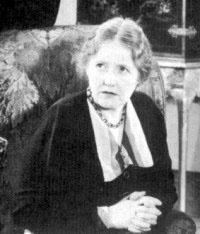
The second half of the detective character is provided by Dame May Whitty as a spirited neighborhood snoop. Whitty reinforces the notion that this is supposed to be England, but is mostly there for lighthearted punctuation. She's so obviously a borrowing from Hitchcock's The Lady Vanishes that we can't help but think that Alfred had a hand in the stew - perhaps Selznick was at some point pushing for Hitch as the director, so as to collect yet another paycheck. The cute Whitty is certainly not unwelcome, but she musses up the clean lines of the story.
As personified by the saucy, insolent Angela Lansbury (in her first role at age 16) the maid Nancy patronizes Paula and flirts with Gregory, but nothing ever comes of it. There's no excursion to the music hall, saving Louis B. Mayer an expensive scene. The adultery aspect of the story doesn't seem as important this time around, even though Lansbury makes a solid impression.
The remake plays as a good mystery that spotlights isolated star turns. Lansbury, Boyer and Bergman each get big solo moments, either by themselves or with the other actors merely looking on. Gregory's villainy is so obvious we have to think that Paula is a much more male-dependent simp than Wynyard's Bella; he's so cruel that the screenwriters wisely make the cook (Barbara Everest) change loyalties before the conclusion. Boyer undergoes a sudden lapse into mania while talking about the real of love his life, fine gems. It doesn't mesh with the character's previous complete control, and comes off as just too thick. 1
Bergman is too compelling not to be good, but we see often the gears turn when the script sets her up for her big moments. The famous turnabout scene has a phony dramatic crescendo written-in to give her a supreme Acting! bit ("What knife?") that isn't as well motivated as it was in the first film. 2
(spoiler)
Interestingly, both versions emphasize that the murderous husband is already married to a woman far away, handily absolving wife number two from any guilt for dropping a dime on Hubby. Just the same, I think she'd wind up in precarious social straits. Stiff Victorians would still consider Bella/Paula a 'used woman.' The fact that she is a completely innocent victim would be beside the point.
(spoilers)
Both films are good, but the English show gets my vote. It's less predictable and stresses the thriller aspects, allowing the two lead performances to shine from within (and I saw the remake first, several times over the years). The Cukor version is a star vehicle first and foremost and reeks of commercial calculation. With those added scenes up front, it's also overlong - it was common for local TV stations in the 1960s to just lop the first reel off this show, starting broadcasts in London. The first version is a nice rumination on the Victorian thriller, and its heroine makes a journey to truth and freedom. In the Cukor version, a shook-up Bergman hops predictably from bad husband Boyer to the waiting arms of dreamboat admirer Cotten. When placed next to the English show, it seems more contrived and has less to say. But Bergman is a magnificent compensation.
Hidden in the cast somewhere is Gibson Gowland, of 1925 Greed fame. Young Terry Moore, billed as Judy Ford, plays the young Paula for one brief shot in an opening flashback.


 English
  Nederlands
  Deutsch
  Français
  Español
  Magyar
  српски
  Dansk
Dansk  Italiano
  Svenska
  Slovenčina
  Português