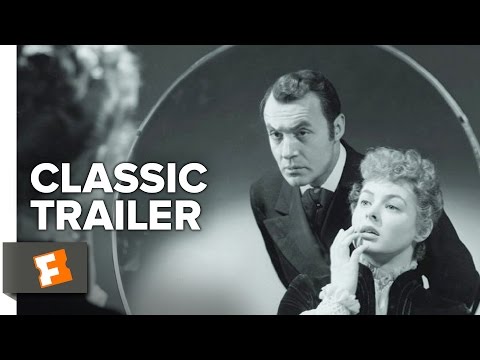
Patrick Hamilton's play Angel Street was given two very good filmic translations in the 1940s. The most famous is obviously the Ingrid Bergman remake with its top star cast and ritzy direction from George Cukor. But the original English film has a lot going for it as well - and is probably the better all-round thriller.
The Thorold Dickinson original version of Gaslight is a period melodrama with an interesting take on psychological disturbances made before the '40s Freudian fad hit Hollywood. Aristocratic Paul Mallen (Anton Walbrook) browbeats and tricks his wife until she believes she must be going insane, a process that's more than credible considering the view of marriage in Victorian times. Bella Mallen (Diana Wynyard) has brought the money into the marriage but is completely at the mercy of male authority. Paul imposes humiliating punishments as if she had no rights whatsoever, imposing his views onto every situation and making her into a virtual prisoner. In short, the Victorian husband has the right to decide what's real and what's not, giving him the ability to inflict extreme mental abuse.
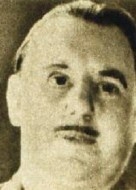
This English version of Gaslight must have received positive notices as one of the heirs to the Alfred Hitchcock throne of thrillerdom. Hitchcock had recently been enticed to America by David O' Selznick and was laboring at making a different kind of Gothic romance/ghost story, Rebecca. In his absence Carol Reed thrilled the Brits with his exciting Night Train to Munich, which had a strong resemblance to The 39 Steps and The Lady Vanishes. This Gaslight begins with an old lady strangled in brutal close-up, and parallels the story inside the Mallen household with the improvised investigation of a retired detective, now a stablemaster (Frank Pettingell). Poor Mrs. Mallen goes nuts, or at least thinks she is, while haunted by eerie phenomena like strange noises and the dimming of the gaslight in her bedroom. She's a damsel in distress trapped in her own household, a situation any wife can identify with. Dickinson's Gaslight is a good example of an always-popular subgenre of thriller that Hitchcock himself returned to on occasion, as in Under Capricorn, also with Bergman.
This early version probably hews close to the original play, taking place almost exclusively around a London square of upper-class homes. There's the fancy piano recital scene interrupted by Bella's breakdown when she's accused of stealing her husband's watch. A trip to a music hall with a lively Can-Can dance is nice break from the Gothic claustrophobia.
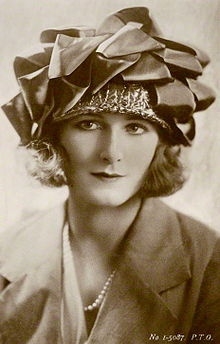
Diana Wynyard (Rasputin and the Empress, Cavalcade)'s Bella just wants to be a happy housewife and is shown being kind to some neighborhood kids (who are barred from the park; why not from this tony borough altogether?). She's the pawn in a sick game that causes her enough believable anxiety to provoke a real nervous breakdown, and she handles it very well. Bella is written straight to the one issue - male dominance - and is never overplayed.
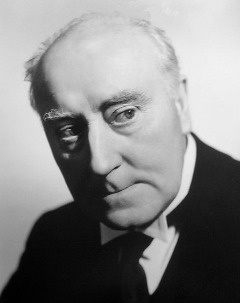
Anton Walbrook (The Life and Death of Colonel Blimp, The Red Shoes) is superb as the manipulative psychopath Paul Mallen. He's more a straight Dr. Crippen-Bluebeard type than a romantic ideal, carefully working out an unlikely but somehow credible scheme. His corruption is complete and we're not asked to have much sympathy for him. Suave and sinister, Walbrook's playing is much smoother than Charles Boyer's in the remake.
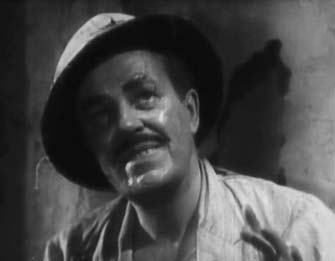
Mallen tries to carry on an affair with his own parlor maid Nancy (Cathleen Cordell, much later of M*A*S*H and The Return of the Living Dead), a subplot that shows how easy it is for a Victorian householder to have his cake and eat it too, by making sure the servants don't talk to his wife. Nancy is proud of her many gentleman friends and all too eager to 'meet' with her employer, and again there's no softening of the implications. We see three abuses of male authority here: A wife driven mad, adulterous exploitation, and outright murder for profit.
Hitchcock watched his competitors like a hawk and may have been influenced by Dickinson's film. (Spoiler) When Bella steps out onto her balcony at the end, 'cured' but disillusioned, she's an isolated soul facing an uncertain future. Visually, the moment is very similar to the end of Vertigo, a tale where romance is used to manipulate a man into a nervous breakdown.


 English
  Nederlands
  Deutsch
  Français
  Español
  Magyar
  српски
  Dansk
Dansk  Italiano
  Svenska
  Slovenčina
  Português