

 English
  Nederlands
  Deutsch
  Français
  Español
  Magyar
  српски
  Dansk
Dansk  Italiano
  Svenska
  Slovenčina
  Português





2010


TV Series | Documentary
Color |


A users' guide to the cosmos, from the Big Bang to galaxies, stars, planets and moons: where did it all come from and how does it all fit together? A primer for anyone who has ever looked up at the night sky and wondered.
From the furthest reaches of space to our own cosmic backyard, we count down the discoveries that changed everything we know about our universe.

Scientists have discovered a mysterious ninth planet on the very edge of our solar system. Ten times the size of Earth, this strange world could have moons with extraterrestrial life.
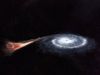
The question in every galaxy and super anomaly students and viewers minds are how do black holes grow so massive. For every possible solution, there exists a different cause. The study continues.

Astronomers discovered a host of other icy objects orbiting around Pluto. Renewed interest was piqued, especially after a New Horizons probe took some high-resolution photos of Pluto in 2015.

The universe is home to real-life Death Stars that could destroy planet Earth. The latest science reveals the terrifying secrets of NASA's six deadliest: vampire stars, supernovas that can vaporize a planet, and unpredictable stars gone rogue.
The ultimate guide to the worst places in the universe. There is Betelgeuse in its death throes and could become a supernova and the possibly a death star. Chuck, the crash-test dummy will be sent on travels to other deadly events,
Life on Mars went through a series of life impacting events and the first impact may have seeded life on earth by debris from Mars..
Dark matter is the biggest mystery of the cosmos. Scientists know that it has been vital to the universe since its birth, new discoveries reveal that it could create black holes, cause mass extinctions, and might even have helped to shape life on the Earth. Might there be a dark matter universe that may account for all the events that aren't really definable? This is all pure speculation and if's.
Discoveries of new planets have revealed countless worlds much stranger than Earth. Some of these strange worlds don't have stars, others are made out of diamonds. Will we ever find a planet like Earth, or are these distant worlds stranger than fiction?

|
Mike Rowe | Self - Narrator |

|
Richard Lintern | Self - Narrator |

|
Michelle Thaller | Self - Astronomer |
|
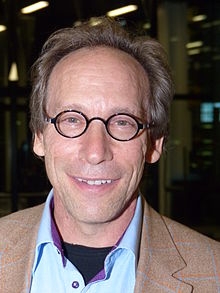
Lawrence Krauss | Self - Cosmologist |

|
Phil Plait | Self - Astronomer |

|
Hakeem Oluseyi | Self - Astrophysicist |

|
James S. Bullock | Self - Astrophysicist |

|
Dan Durda | Self - Planetary Scientist |
|
|
Moogega Cooper | Self - Planetary Protection Engineer |
|
|
Jani Radebaugh | Self - Planetary Scientist |
|
|
Nina Lanza | Self - Planetary Scientist |
|
|
Konstantin Batygin | Self - Planetary Astrophysicist |

|
Mike Brown | Self - Planetary Astronomer |
|
|
Kevin Walsh | Self - Astronomer |
|
|
Katie Freese | Self - Cosmologist |
|
|
David Kipping | Self - Astronomer |
|
|
Jedidah Isler | Self - Astrophysicist |
|
|
Todd Thompson | Self - Astrophysicist |

|
Chris McKay | Self - Astrobiologist |

|
Seth Shostak | Self - Astronomer |

|
Max Tegmark | Self - Physicist |
|
|
Fritz Zwicky | Self - Astronomer |
|
|
John Spencer | Self - New Horizons Co-Investigator |
|
|
Alan Stern | Self - New Horizons Principal Investigator |
|
|
Chiara Mingarelli | Self - Astrophysicist |
| Producer | Mark Bridge, Wyatt Channell, Stephen Marsh, Kirstie McLure, Rob Elliott, Tom Ranson, Rory Griffin, Fraser Mullen | |
| Photography | Chris Sutcliffe, Max Williams, Jefferson Miller | |
| Nr Discs | 1 |
|---|
| Index | 2745 |
|---|---|
| Added Date | Mar 31, 2020 09:20:31 |
| Modified Date | Mar 31, 2020 09:36:13 |