

 English
  Nederlands
  Deutsch
  Français
  Español
  Magyar
  српски
  Dansk
Dansk  Italiano
  Svenska
  Slovenčina
  Português





2010


TV Series | Documentary
Color |


A users guide to the cosmos from the big bang to galaxies, stars, planets and moons. Where did it all come from and how does it all fit together. A primer for anyone who has ever looked up at the night sky and wondered.
Beneath the hood of your car lies the history of the Universe. The iron in your chassis, the gold in your stereo and the copper in your electronics all owe their existence to violent cosmic events that took place billions of years ago.
There is a hellish planet in our solar system; covered in thick dense clouds and roasted by colossal temperatures. Incredibly this is a vision of Earth's future. To understand how our world will be destroyed we need to look at Earth's evil twin Venus.
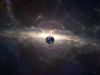
Black holes are the least understood places in the universe, where the rules of physics collapse. We go inside the super-massive black hole in the center of the Milky Way.
Giant magnetic bubbles millions of miles wide, bizarre invisible matter, and a death star tearing through bands of icy comets, flinging them into violent orbits. All this and more could be inside our cosmic backyard, and effecting our lives on Earth.
We're on the verge of unconvering the how life on Earth came to be. Our origin is a hotly contested scientific debate. Did we come from strange volcanic hatcheries deep under the sea? Or did life on Earth come from another planet?
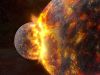
Our Moon is stranger than you think, and we reveal its incredible secrets. Can we thank the Moon for life on Earth? What explains the mysterious tunnels beneath its surface? Is a lunar base the key to humanity's future in space?
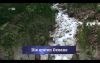
For years, scientists suspected that the oceans came from molecules delivered to Earth from distant stars by asteroids, but a new discovery suggests that their true origins may be more exotic.
There's a mysterious force you can't see or touch, but it affects everything in the universe. Magnetism has shaped our cosmos, and without it, Creation would simply disintegrate. We follow scientists trying to understand how this strange force works.

|
Richard Lintern | Self - Narrator |

|
Michelle Thaller | Self - Astronomer |
|
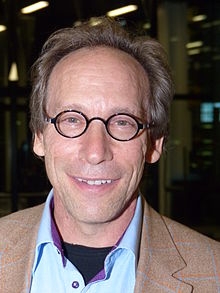
Lawrence Krauss | Self - Cosmologist |

|
Phil Plait | Self - Astronomer |

|
Mike Rowe | Self - Narrator |

|
Hakeem Oluseyi | Self - Astrophysicist |

|
Moogega Cooper | Self - Planetary Protection Engineer |
|
|
James S. Bullock | Self - Astrophysicist |
|
|
Nina Lanza | Self - Planetary Scientist |
|
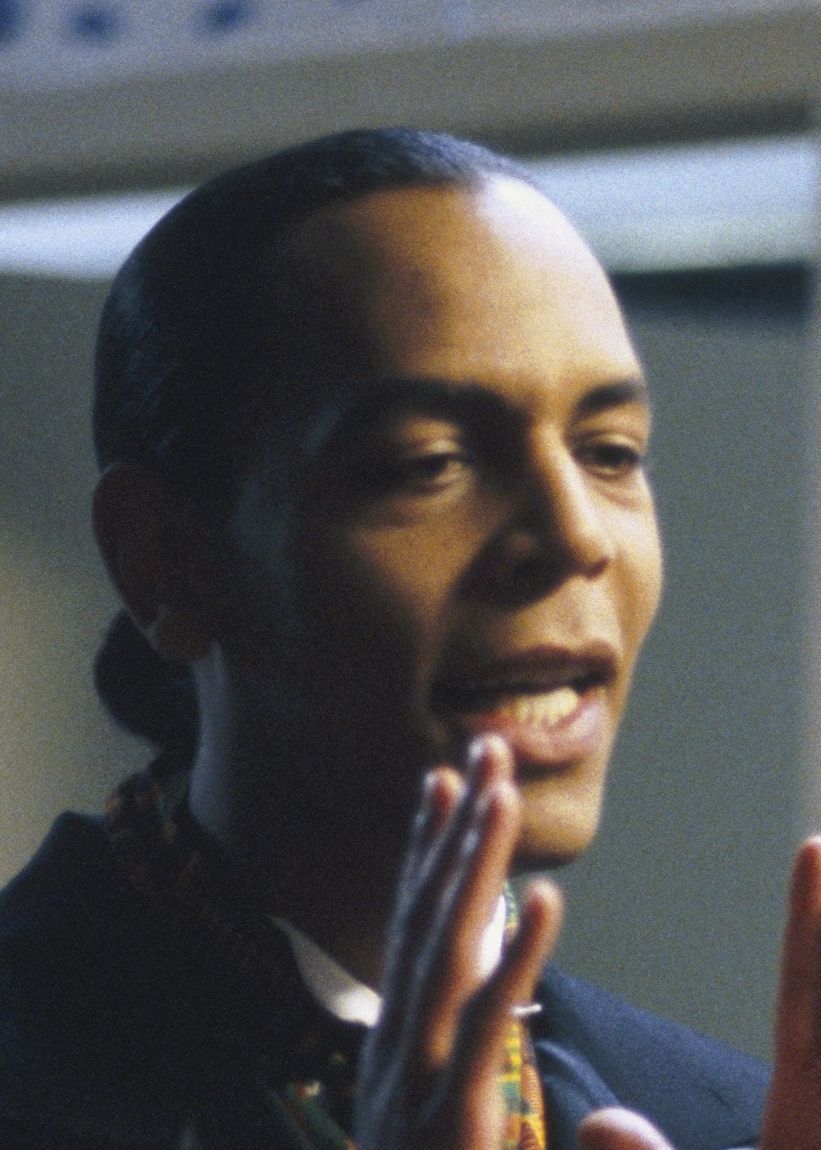
Erik Dellums | Self - Narrator |

|
Dan Durda | Self - Planetary Scientist |
|
|
Jani Radebaugh | Self - Planetary Geologist |

|
Chris McKay | Self - Astrobiologist |
|
|
David Grinspoon | Self - Astrobiologist |
|
|
Kevin Walsh | Self - Astronomer |
|
|
Lewis Dartnell | Self - Astrobiologist |
|
|
Carey Lisse | Self - Astronomer |

|
Sean Carroll | Self - Theoretical Physicist |

|
Max Tegmark | Self - Theoretical Physicist |
|
|
Shep Doeleman | Self - Astronomer |
|
|
Stephen Mojzsis | Self - Geologist |
|
|
David Jewitt | Self - Astronomer |
|
|
Andrew J.S. Hamilton | Self - Theoretical Physicist |
|
|
Daniel Lathrop | Self - Geophysicist |
|
|
Karen Meech | Self - Astronomer |
| Director | Mark Bridge |
|
| Erik Todd Dellums |
|
|
| Mike Rowe |
|
|
| Writer | Eleanor Grant, Madeline Carter, Erik Todd Dellums, Mike Rowe, Jeremy Turner | |
| Producer | Mark Bridge, Wyatt Channell, Stephen Marsh, Jeff Stepp, Nick Miller, Lisa Murphy-O'Reilly, Billie Pink | |
| Photography | Paul Lang, Chris Sutcliffe, Max Williams | |
| Nr Discs | 1 |
|---|---|
| Layers | Single side, Single layer |
| Index | 2350 |
|---|---|
| Added Date | Mar 12, 2016 02:09:41 |
| Modified Date | Jun 27, 2018 07:21:38 |