A female girlie club entertainer in Weimar Republic era Berlin romances two men while the Nazi Party rises to power around them.
-------------------------
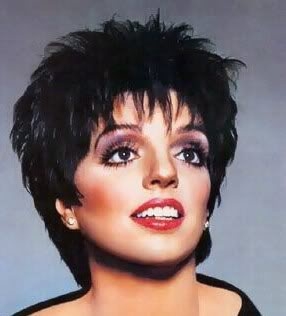
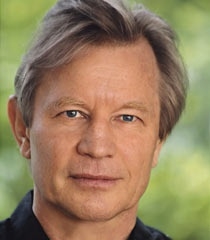
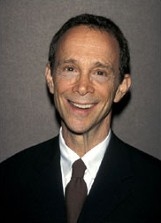
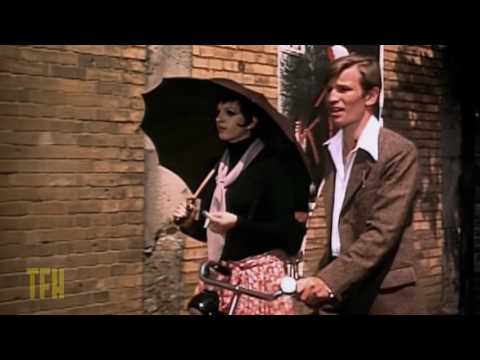
Originally a 1966 Broadway musical, this groundbreaking Bob Fosse musical was in turn based on Christopher Isherwood's Goodbye to Berlin, previously dramatized for stage and screen as I Am a Camera with Julie Harris as Sally Bowles. Fosse uses the decadent and vulgar cabaret as a mirror image of German society sliding toward the Nazis, and this intertwining of entertainment with social history marked a new step forward for the movie musical. Michael York plays a British writer who comes to Berlin in the early 1930s in hopes of becoming a teacher. He makes the acquaintance of flamboyant American entertainer Sally Bowles, played by Liza Minnelli. Sally works at the Kit Kat Klub, a George Grosz-like Berlin cabaret where each night the smirking, androgynous Master of Ceremonies (Joel Grey) introduces a jazz-driven "girlie show" to his debauched audience. Virtually all the film's musical numbers are staged within the confines of the Kit Kat Klub, and each song comments on the plot and on Germany's "progression" from hedonism to Hitlerism. Most of the Broadway score by John Kander and Fred Ebb was retained, with the welcome addition of "The Money Song." Although it lost Best Picture to The Godfather, Cabaret won eight Oscars, including awards to Minnelli, Grey, and Fosse. A heavily expurgated 88-minute version of Cabaret has been prepared for commercial TV presentations; avoid this one at all costs, and hold out for the 124-minute theatrical cut.
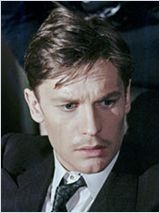
AMG Review: Less a traditional musical than a drama featuring musical numbers, Cabaret is a beautiful, disturbing evocation of life in Germany during Hitler's rise to power. Using the Kit Kat Club's expertly choreographed routines to reflect the changes in German society, director Bob Fosse effectively shows us a glittering, illusory world, whose insular decadence starkly contrasts with the encroaching horror of reality. Sally Bowles exists at the heart of the turmoil, a conductor for the unrestrained, buoyant energy that both electrifies the club and stands to be threatened by what is going on in the world outside of it. Brash, shamelessly sexual, and bearing a self-assurance of enviable proportions, she is a perfectly flawed heroine, one of the most fully realized women incarnated on the page, stage, and screen. Liza Minnelli portrays her with the energy and blissful abandon that the character requires, turning in one of the best performances of her career. The sight of her performing in the Kit Kat Club, clad in a bowler, boots, and little else and making novel use of a chair, remains one of the screen's most iconic images. The focus on the relationships of the film's main characters, most notably that of Sally and Brian (played with gentle, almost poetic befuddlement by Michael York), perfectly juxtaposes the turbulence of private lives and public events. Sally's promiscuity, Brian's bisexuality, Maximilian's casual use of both characters, and the eventual acceptance of platonic friendship mirror the fortunes of a time and mentality whose mantra of pleasure would soon be forced to give way to one of pain. The best and most terrifying evocation of past debauchery and present "progression" towards a new, fascist ideal, is of course the Emcee. As played by an unforgettable Joel Grey, he occupies an existence somewhere between human and phantom, a cunning apparition who serves as a reminder of carnal delight and ideological oppression. Like the Emcee, Cabaret shows us both delight and oppression, providing a nuanced portrait of an era where the former was rapidly being eclipsed by the latter.


 English
  Nederlands
  Deutsch
  Français
  Español
  Magyar
  српски
  Dansk
Dansk  Italiano
  Svenska
  Slovenčina
  Português